Video file
Image

B2B Food Ingredients Marketing Trends
FI Europe B2B Marketing Trends
Average reading time
7 min
Summary
FI Europe B2B Marketing Trends highlight a growing shift toward more integrated, insight-driven strategies in the food ingredients sector, where complex buyer journeys and increased competition demand stronger differentiation and clearer value communication. As decision-making units expand across R&D, procurement, and commercial teams, marketers must deliver targeted, relevant messaging that addresses both technical and business needs. Success depends on combining deep industry knowledge with data-driven targeting, effective segmentation, and multi-channel engagement. AI, intent data, and first-party insights are enabling more precise audience understanding and campaign optimization. At the same time, strong brand positioning, educational content, sustainability narratives, and trust-building remain critical to influence stakeholders and drive long-term growth. For a deeper dive into the trends shaping B2B marketing in the food ingredients industry, explore the full report.
Summary
FI Europe B2B Marketing Trends highlight a growing shift toward more integrated, insight-driven strategies in the food ingredients sector, where complex buyer journeys and increased competition demand stronger differentiation and clearer value communication. As decision-making units expand across R&D, procurement, and commercial teams, marketers must deliver targeted, relevant messaging that addresses both technical and business needs. Success depends on combining deep industry knowledge with data-driven targeting, effective segmentation, and multi-channel engagement. AI, intent data, and first-party insights are enabling more precise audience understanding and campaign optimization. At the same time, strong brand positioning, educational content, sustainability narratives, and trust-building remain critical to influence stakeholders and drive long-term growth. For a deeper dive into the trends shaping B2B marketing in the food ingredients industry, explore the full report.

Olivia Taylor
Content Marketeer
What stood out at FI ?
Introduction
Chapter 1: Enhanced experience marketing through tasting
Chapter 2: Driving connection by meaningful conversations
Chapter 3: Innovating at the intersection of health and taste
Chapter 4: Cross-sector synergies and total solutions
Chapter 5: Establishment of thought leadership
Image

Introduction
Fi Europe 2024: taste, the beginning of every conversation
At FIE 2024 taste took center stage and innovation came to life through samples and prototypes. From plant-based desserts and protein-enriched snacks to groundbreaking cocoa alternatives, exhibitors showcased how functional foods and sustainable solutions can deliver on flavor while addressing pressing industry challenges. Beyond the samples and prototypes, the event was about fostering meaningful connections. Open, inviting booths created spaces for authentic dialogues.
This is the essence of FIE: bringing people together to create and inspire. The vibrant atmosphere, filled with engaging talks on emerging trends and thought leadership, paired perfectly with the tangible experience of tasting the latest innovations.
In this report, we distill what we saw, heard, and tasted into actionable insights. From the most exciting trends to practical ideas for implementation, consider this your guide to translating the spirit of FIE into impactful strategies for your business.
Image

Image
Chapter 1: Enhanced experience marketing through tasting
Taste is the ultimate conversation starter
At FIE 2024, taste emerged as the central driver of engagement, turning complex ingredient solutions into relatable, sensory experiences. Companies used the power of taste to not only showcase their products but also connect with visitors on a memorable level.
What’s happening?
Taste has become the anchor of experiential marketing in the food and beverage industry. By creating hands-on opportunities for visitors to sample products in real applications, like functional gummies, plant-based desserts, or high-protein snacks, exhibitors bridged the gap between technical details and real-world value.
Image

From powder to product
As one exhibitor noted, “Our product is a white powder. It’s very unsexy. You cannot show a white powder.” Instead, companies demonstrated how their ingredients transform into appealing end products through demo kitchens, tasting stations, and prototype showcases. These efforts made the intangible tangible, helping visitors connect with the practical applications of innovations in a compelling way.
From product to trend
Taste doesn’t just showcase a product—it shapes how it fits into broader trends. Taste-driven experiences connected technical innovations to evolving consumer demands like health, sustainability, and plant-based alternatives.
From taste to memorable experiences
Experiencing a product through taste activates deeper engagement and memory retention, turning intellectual understanding into emotional connection. Visitors didn’t just sample products, they felt the innovation. By engaging multiple senses, exhibitors captured attention, built trust, and created narratives that resonated far beyond technical explanations.
How this relates to global trends
64%
According to Innova Market Insights, 64% of global consumers prioritize taste when exploring new food products. This reinforces the importance of creating taste-led experiences that connect innovations to consumer desires.
Image

What stood out?
Some exhibitors turned their tasting sessions into curated experiences, presenting prototypes in a restaurant-style menu. Offerings included plant-based savory snacks such as “Paprika Twist” and “Fusion Roll,” alongside indulgent desserts like “Coco Mango Delight” and “Chocovanila Bliss Muffin.” By serving these creations with the sophistication of a dining experience, guests were invited to explore the flavors and possibilities of these innovative products in an memorable way.
Showcasing a versatile portfolio through taste-focused “experience zones,” one exhibitor allowed visitors to sample innovative applications like plant-based salmon bites, refreshing drinks, and protein-enhanced snacks. By aligning these offerings with health-focused trends and sustainability, they demonstrated how technical solutions could seamlessly translate into tasteful relatable, real-world applications.
One exhibitor emphasized their commitment to flavor with the tagline, “We Make Taste,” reinforcing the central role of taste in product development. While another, with their slogan “Test and Taste,” underscored the connection between innovation and sensory validation, emphasizing that successful breakthroughs must also deliver an exceptional sensory experience to the end consumer.
We couldn’t miss the buzz around an eye-catching “foodtrailer” truck, where guests could explore an innovative hybrid tasting menu featuring creations like hybrid pies, rolls, and tacos, developed to incorporate partially or fully replaced meat options.
Image

Live cooking demonstrations
Engage the audience through live cooking demonstrations or “demo kitchens.” For example, create dishes in real-time to highlight how your product transforms into appealing end products. Pair this with expert chefs or nutritionists who can explain the benefits while cooking, creating an interactive and sensory-driven experience.
Collaborations with influencers
Partner with food bloggers, chefs, or social media influencers to host live tasting sessions at your stand. Their presence can amplify your brand’s reach and generate buzz online, attracting more visitors.
Interactive “build-Your-own” stations
Set up tasting stations where visitors can customize their samples, such as building their own plant-based tacos, mixing flavors for functional beverages, or topping protein bars. This hands-on interaction creates a deeper connection with the product.
Gamify tasting experiences
Add an element of fun by gamifying the tasting experience. For example, set up a blind tasting challenge where visitors distinguish egg-free waffle vs. regular waffle, plant-based cheese dip vs. dairy-based cheese dip, or hybrid pepperoni pizza vs. regular pepperoni pizza.
Showcase through trends
Align your tasting experiences with global consumer trends. For example, set up dedicated zones for “Plant-Based Innovations” or “Functional Indulgence,” showing how your products fit into these popular movements. Highlight data points like Innova Market Insights’ statistic that 64% of consumers prioritize taste.
Collect visitor feedback
Turn your tasting into a two-way conversation. Provide cards or digital forms where visitors can rate the products they try. Use this feedback to improve your offerings and show visitors that their input is valued.
Image

Image

The proof of the pudding is in the eating, and at FIE 2024, tasting was believing. This approach demonstrated a key truth: no matter how advanced or health-focused a product is, it must ultimately deliver on taste to succeed.
Image

Chapter 2: Driving connection by meaningful conversations
FIE 2024 reaffirmed the role of in-person events as essential gathering points for global companies, where stakeholders from across the world could meet, engage, and build relationships. The pandemic may have highlighted the importance of live interactions, but their value has only grown.
Stand design became a strategic tool for fostering meaningful dialogue and engagement. Exhibitors embraced simplicity, open layouts, and a welcoming atmosphere, transforming their stands into spaces that naturally encouraged conversation and strengthened connections.
Image

What’s happening?
As businesses shift toward relationship driven marketing, physical spaces at trade events are becoming more than just showcases they are hubs for interaction and dialogue.
Open and welcoming booth
Exhibitors moved away from cluttered, overwhelming booths, embracing open, minimalist layouts with natural materials like wood and plants. This approach brought a sense of warmth and authenticity while reflecting a commitment to sustainability. The result was vibrant, welcoming spaces that became hubs of interaction.
The “less is more” messaging approach
Clear and concise messaging replaced crowded visuals and excessive information. Exhibitors provided just enough detail to spark curiosity, leaving room for sales teams to engage visitors in deeper, personalized discussions.
The crucial role of sales teams
Sales teams were the driving force behind turning initial interest into meaningful connections. While the inviting stand designs and clear messaging served as conversation starters, it was the sales teams who brought these interactions to life. Their role extended beyond delivering standard pitches—they acted as storytellers, serving innovations on a plate. Through tasting experiences and product demonstrations, they translated technical details into relatable, tangible benefits, creating a deeper understanding and stronger connection with visitors.
Image
Integrating physical and digital tools
Exhibitors at FIE 2024 embraced digital solutions, reducing paper brochures in favor of QR codes, touchscreens, and interactive displays. These tools provided quick access to product details, offering attendees an engaging and sustainable experience.
Many exhibitors leveraged tools like the FIE app to streamline networking. This blend of physical spaces and digital efficiency enhanced the overall visitor experience, ensuring connections were seamless and impactful.
Social media before and after
While personal connections were the focus at the booth, many brands extended their presence digitally before the event. Social media campaigns built anticipation ahead of FIE 2024, and live posts during the show captured key moments, engaging broader audiences.
How this relates to global trends
69%
According to a recent study, 69% of marketers believe that investing in brand and human-centric marketing provides a competitive edge in performance marketing.
50%
Research indicates that engaging booth designs can increase visitor dwell time by up to 50%, significantly enhancing opportunities for lead capture and sales conversations.
Image

What stood out?
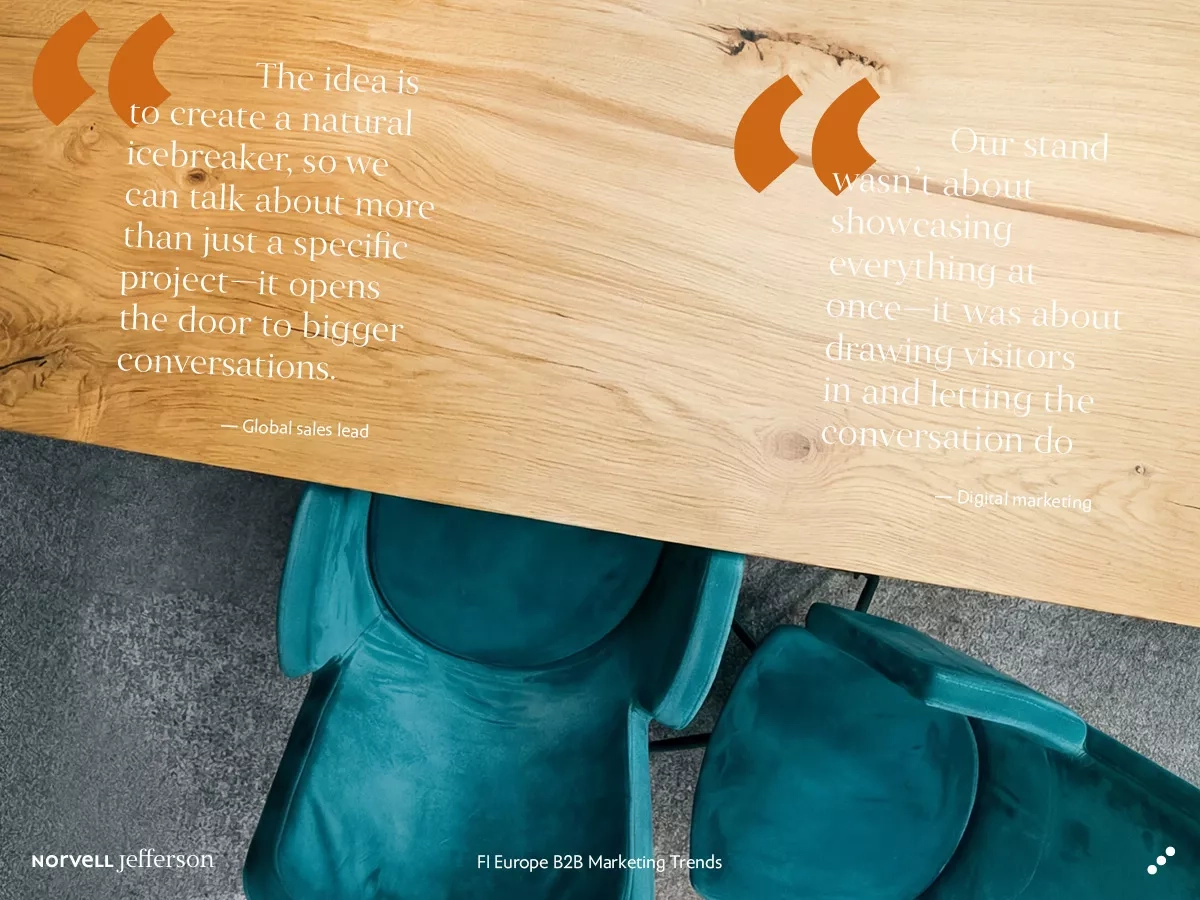
One exhibitor perfectly embodied the idea of open spaces inviting meaningful conversations. Their booth featured interactive elements, such as a wall where visitors could place colorful balls in baskets to answer questions about industry challenges. This simple yet engaging activity sparked thought-provoking dialogue and encouraged participation.
A post-it wall with the prompt, “Show us your meaningful conversation,” further invited visitors to share their insights, creating a collective discussion space. Alongside these open and interactive features, private rooms provided space for deeper, focused interactions. This combination of playful engagement and thoughtful design transformed the booth into a vibrant hub for dialogue and connection.
In general, exhibitors enhanced meaningful connections by utilizing external meeting rooms for pre-scheduled client appointments. This strategic approach facilitated focused, uninterrupted discussions, fostering deeper engagement and collaboration. The event’s digital platform enabled exhibitors to manage these meetings efficiently, allowing them to assign team members, confirm or cancel appointments, and maintain a structured schedule.
Embedding sustainability and circularity in design
Plants featured prominently at many stands, enhancing the natural and inviting atmosphere of the fair. One stand took this idea further by giving away their plants on the last day of the fair, ensuring they were reused rather than discarded, but also committing to reusing their booth at future events. This quiet yet meaningful gesture demonstrated how companies embed sustainability into their actions, reflecting a genuine commitment to meaningful practices over mere statements.
Image

Engaging activities
Use your booth to host an engaging talk or activity to draw in attendees. Crowds tend to attract more attention, so by creating a buzz around your booth, you’ll naturally attract more organic visitors.
Balance open spaces and private areas
While open areas foster casual engagement, incorporate semi-private or private meeting spaces within your booth for deeper discussions and meaningful one-on-one conversations.
Standout booth design for visibility
Ensure your booth is visible from a distance by incorporating bold, surprising, or uniquely creative design elements positioned strategically.
Leverage pre- and post-event social media
Build excitement before the event with sneak peeks of your booth or activities. During the event, post live updates, share visitor interactions, and host Q&A sessions on social platforms to extend the reach of your in-person engagement.
Interactive engagement through collective dialogue
Design booth interactions that ask visitors thought-provoking questions and let them visually see answers from themselves and others. For instance, use a wall where visitors can post their responses or cast votes on industry challenges, with results displayed in real-time through color-coded charts or word clouds. This approach fosters curiosity, sparks meaningful conversations, and helps attendees feel connected to a larger community while gaining insight into industry-wide perspectives.
Image
Image

Chapter 3: Innovating at the intersection of health and taste
Meeting the demand for health-conscious nutrition
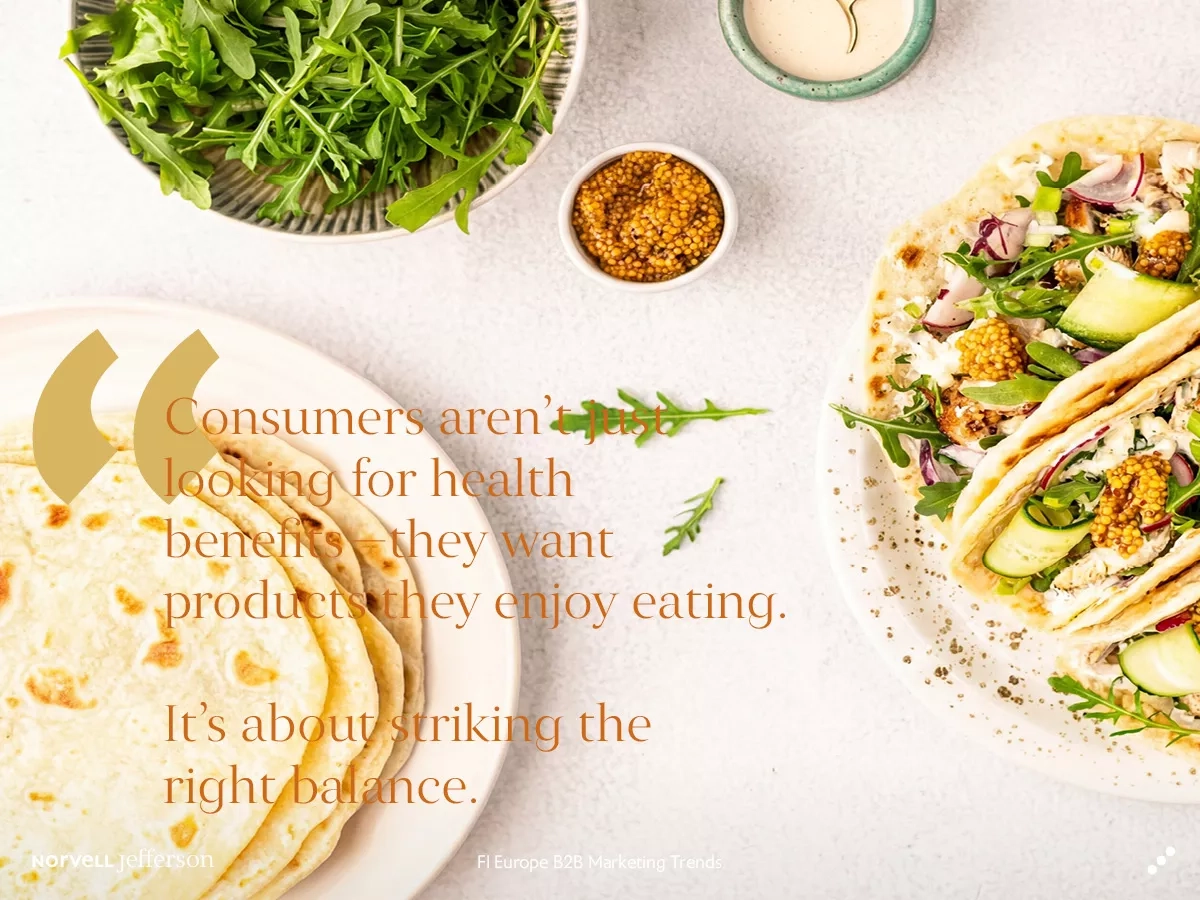
At FIE 2024, exhibitors showcased innovative solutions designed to offer added benefits like high protein, reduced sugar, healthy aging and gut health support reflecting the shift toward functional foods that deliver measurable benefits. This trend is further supported by the demand for clean labels and natural ingredients, as consumers increasingly seek transparency in what they eat. These products are redefining how food contributes to well-being by combining functionality with sensory appeal.
Image

What’s happening?
The trend toward functional foods reflects evolving consumer expectations for products that go beyond basic nutrition. Health-conscious buyers increasingly seek foods that actively support their health goals, such as weight management, muscle recovery, or immune health. This trend was evident in the wide range of functional snacks, beverages, and supplements on display.
Supporting the weight management journey
Weight management emerged as a key theme, driven by the growing consumer use of medications like Ozempic and GLP-1. These drugs, which suppress appetite and influence food choices, have led in us and uk to changing consumption patterns, including reduced cravings for calorie-dense, high-fat, or sweet foods.
The food industry is responding with smaller portion sizes, healthier product lines, and packaging innovations designed to cater to both GLP-1 users and a broader health-conscious audience interested in weight management.
Some companies are also exploring alternatives that mimic the benefits of these medications, like products promoting satiety or better blood sugar control. These trends suggest a pivot toward more health-conscious branding and product development.
This disruption could have broader implications for marketing strategies. Brands that adapt by emphasizing health benefits, portion control, and reduced-calorie options might better align with evolving consumer preferences.
In 2025, under the new U.S. government, we anticipate a much more critical approach from the health department toward processed foods. This will likely mark the beginning of a major shift away from heavily processed products in favor of healthier options.
Image

A shift towards proactive health management
The functional food market reflects a broader trend toward proactive health management. Exhibitors emphasized solutions for longevity, muscle recovery, and disease prevention, aligning with the growing demand for foods that support long-term well-being demonstrating how functional foods are becoming integral to a proactive approach to health.
Shifting focus to evidence-backed marketing
Functional food success depends on rigorous scientific validation and clear communication. At FIE 2024, exhibitors balanced technical accuracy with accessibility, using storytelling and tasting experiences to make the science behind their products relatable. For example, companies demonstrated how high-protein snacks support muscle recovery or how prebiotic-enriched beverages promote gut health, connecting these benefits directly to consumer needs.
The complexities of food innovation
Developing functional foods is a time-intensive process often slowed by regulatory challenges. Unlike pharmaceuticals, which benefit from uniform global standards, food innovation must navigate fragmented regulations across regions which can take years. This creates additional layers of complexity, requiring companies to balance innovation with compliance while maintaining timelines.
Bridging innovation with education
Exhibitors combined interactive demonstrations with educational seminars to connect innovations to practical applications. Demo kitchens and tasting stations showcased products like protein-enriched snacks and gut health supplements, while seminars provided deeper insights into the science behind them. This dual approach bridged the gap between technical details and real-world benefits, ensuring a diverse audience could engage meaningfully with the innovations.
Image

How this relates to global trends
64%
According to Euromonitor, 64% of consumers are interested in functional foods that address specific health concerns.
60%
According to McKinsey’s 2024 wellness market report, over 60% of consumers consider purchasing products or services that aid in healthy aging and longevity as “very” or “extremely” important. Additionally, approximately 70% of consumers in the United Kingdom and the United States, and 85% in China, reported increasing their purchases in this category over the past year.
70%
70% of health-conscious consumers trust products backed by clear, evidence-based claims, reinforcing the importance of validation in the functional food market.
Image

What stood out?
One exhibitor showcased a bone density supplement specifically targeting osteoporosis, backed by clinical studies and interactive demonstrations
Another highlighted bioactive ingredients for muscle recovery and skin health, framing them as solutions for healthy aging. These companies blended technical rigor with approachable storytelling, making complex innovations accessible and engaging.
Highlight evidence-backed benefits
Frame your product as a scientifically validated solution to health challenges. Use clinical studies, clear data points, and expert endorsements to establish credibility, ensuring your claims resonate with health-conscious consumers.
The future of food is centered on healthier, less processed products with fewer ingredients and reduced sugar. Brands that embrace this shift toward conscious eating and prioritize healthier options will position themselves as market leaders.
Image
Image
Chapter 4: Cross-sector synergies and total solutions
Cross-sector synergies emerged as a critical trend, with companies emphasizing their ability to deliver comprehensive solutions that extend beyond their core offerings. By integrating expertise across multiple domains exhibitors positioned themselves not just as suppliers but as strategic partners capable of addressing a wide range of challenges.
Image

What’s happening?
The food industry is becoming increasingly complex, requiring solutions that address multiple needs simultaneously. In response, many companies are moving away from offering isolated products and focusing instead on holistic approaches that combine services, technical expertise, and tailored solutions.
Collaboration across industries
Cross-sector collaboration is driving innovation as companies partner with experts in complementary fields, such as technology, sustainability, and health sciences. These collaborations result in more advanced solutions, such as plant-based products with optimized texture and nutritional profiles or functional foods developed with pharmaceutical-grade precision. These synergies demonstrate the value of co-creation in meeting evolving consumer demands.
From suppliers to strategic partners
Companies are redefining their roles in the food industry by shifting from being mere ingredient suppliers to becoming strategic partners. This involves offering comprehensive solutions that integrate formulation expertise, regulatory guidance, and market insights. By taking on this broader role, businesses help their clients streamline innovation and bring products to market faster while addressing multiple needs in one cohesive approach.
Image

Leveraging technology for efficiency
Digital tools are playing a pivotal role in facilitating cross-sector synergies. Platforms for recipe development, ingredient traceability, and supply chain optimization are enabling companies to offer seamless experiences to their clients. These technologies not only improve operational efficiency but also enhance collaboration, making it easier to align technical solutions with market requirements.
How this relates to global trends
80%
A 2023 McKinsey report highlighted that 80% of companies view partnerships as critical for innovation.
72%
According to Innova Market Insights, 72% of global consumers are willing to pay more for sustainable products.
Image

What stood out?
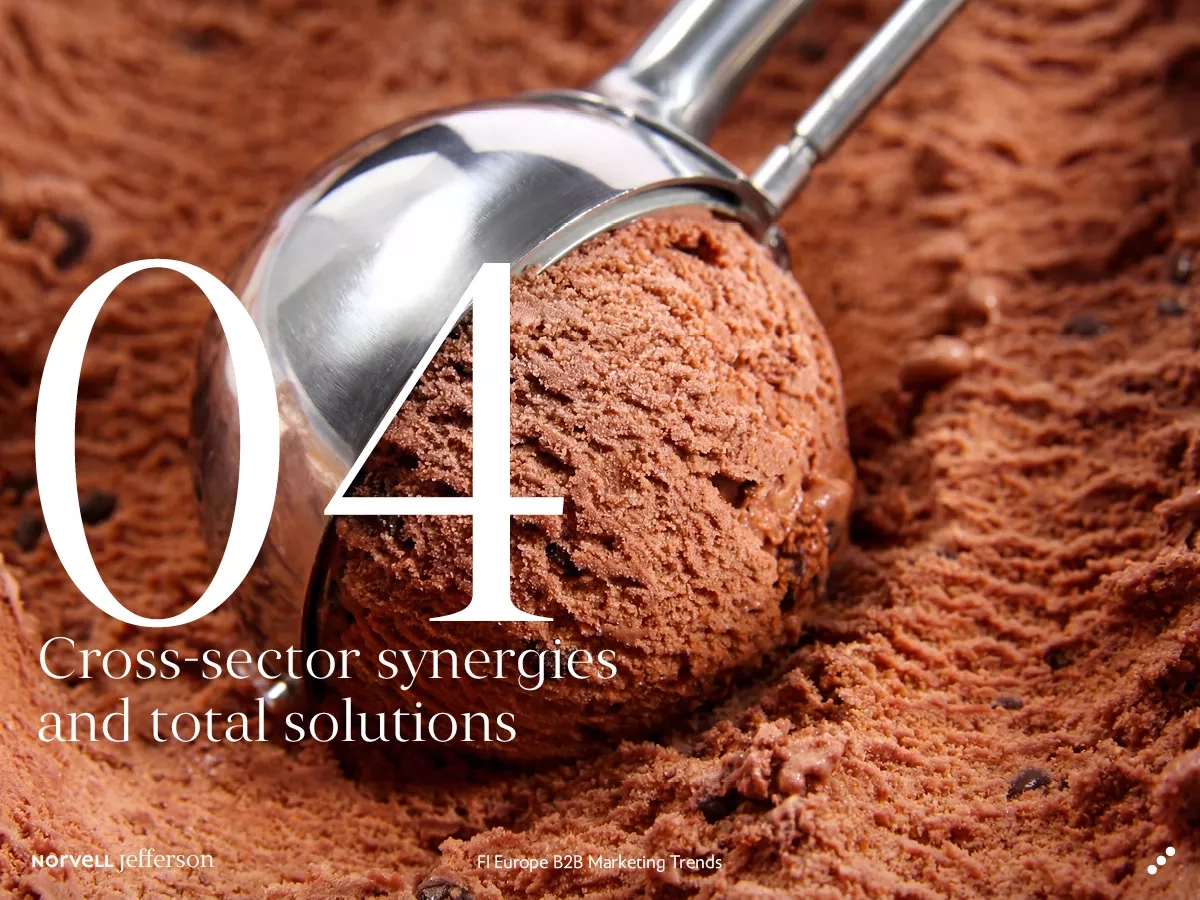
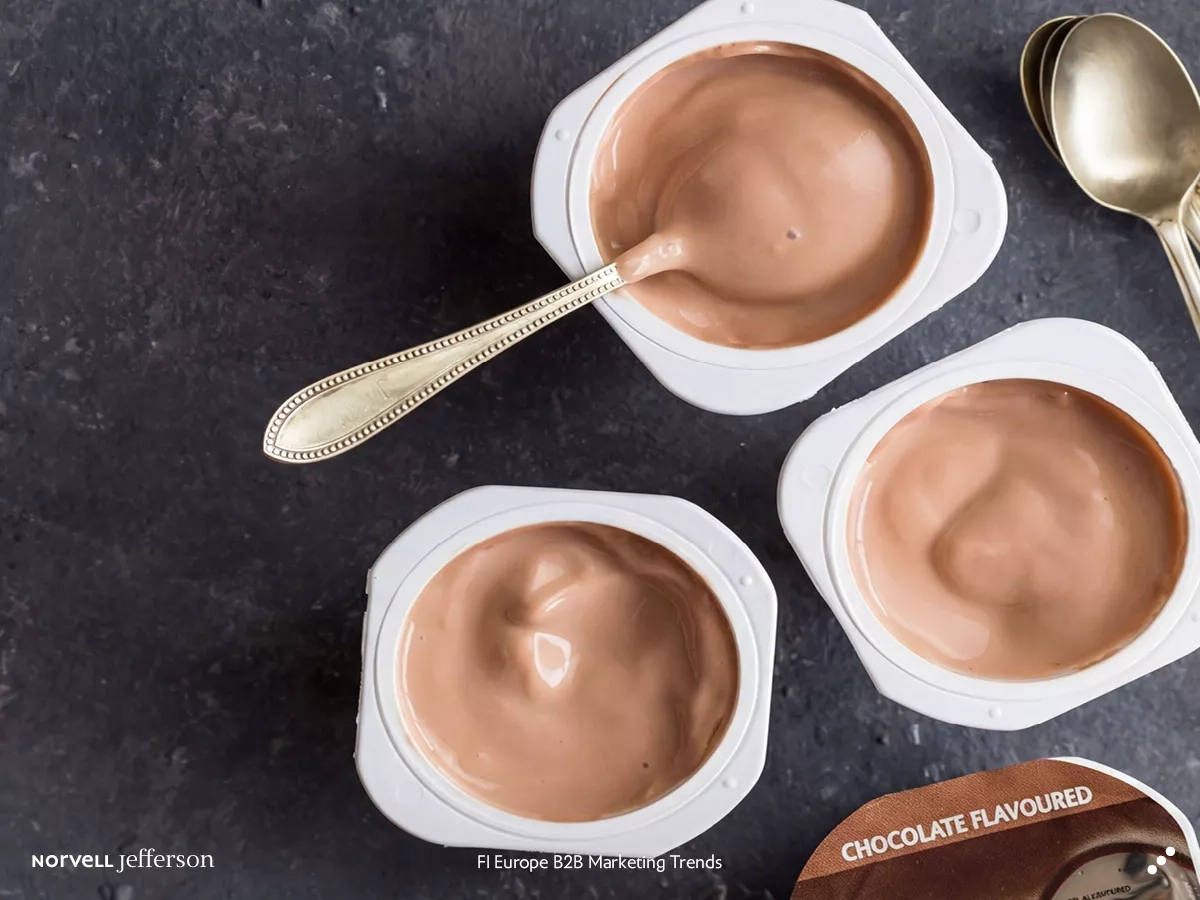
Reflecting the theme of cross-sector synergies, a confectionery alternative to chocolate exemplified innovative collaboration at FIE 2024. Developed in partnership with a food technology company, it uses grape seeds and sunflower kernels to replicate the taste and texture of traditional chocolate without using cocoa. This approach addresses challenges like rising cocoa prices and environmental concerns, offering a more sustainable indulgence option.
This innovation earned the prestigious Future FoodTech Innovation Award at FIE 2024, highlighting how cross-sector partnerships can lead to groundbreaking solutions. By integrating sustainability, advanced food science, and a focus on consumer needs, this achievement underscores the transformative power of partnerships.
Image

Image
Chapter 5: Establishment of thought leadership
Positioning expertise as a competitive edge
At FIE 2024, thought leadership emerged as a critical element of marketing strategies, with companies actively engaging in seminars, panel discussions, and innovation awards. These platforms allowed exhibitors to demonstrate expertise, share insights, and address industry challenges.
Image

What’s happening?
Companies adapted a value-driven approach which went beyond product promotion, focusing instead on informing, inspiring, and building trust with industry audiences.
Value driven engagement
Seminars were a key avenue for exhibitors to position themselves as industry leaders. These sessions covered a range of critical topics, from sustainability and functional food trends to overcoming supply chain challenges. By sharing data, insights, and solutions, exhibitors built trust and established themselves as credible voices in shaping the future of the food industry.
Innovation awards as proof points
Recognition through awards, such as the Future FoodTech Innovation Award, further solidified the role of thought leadership at FIE 2024. Winning or being shortlisted showcased a company’s ability to push boundaries and deliver impactful solutions, elevating their profile and reinforcing their position as trailblazers in the industry.
Image

Shaping the conversation beyond products
Exhibitors embraced a broader narrative, focusing on key industry challenges rather than solely promoting their products. By addressing issues like sustainability, health trends, and regulatory complexities, they engaged audiences on a deeper level. This approach demonstrated a commitment to contributing to the larger industry dialogue, enhancing their relevance and appeal to stakeholders.
How this relates to global trends
68%
According to Edelman’s 2023 Trust Barometer, 68% of B2B buyers prioritize trust in their purchasing decisions. Thought leadership initiatives that offer actionable insights and solutions help build this trust, making companies valuable partners.
72%
According to Demand Gen Report, 72% of consumers are more likely to engage with brands that offer valuable, educational content.
Image
What stood out?
Some companies leveraged the event’s seminar platforms to present insights on emerging topics like sustainability, functional food trends, and regulatory challenges. By sharing actionable data and innovative solutions, they built credibility and demonstrated their role in shaping the future of the industry.
A prominent ingredient supplier hosted a seminar on overcoming formulation challenges in plant-based foods, combining insights on ingredient functionality with market data to demonstrate their expertise.
A company specializing in dairy alternatives unveiled a groundbreaking fat replacement system that mimics traditional dairy fats, offering attendees a live demonstration of its use in multiple applications.
Another exhibitor introduced an AI-driven platform for recipe optimization, illustrating how technology can streamline product development while meeting consumer demand for clean-label products.
The number of entries for the Fi Europe Innovation Awards increased by an impressive 63% compared to last year, reflecting a growing emphasis on innovation in the industry. This surge was particularly notable in the new categories of dairy alternatives, food manufacturing, future foodtech, and pet food.
Image

Distribute value- driven content
Provide attendees with white papers, reports, or digital resources related to your seminar topics. Ensure this content is insightful and actionable to enhance trust and keep the conversation going beyond the event.
Industry collaboration hub
Create an online community or forum where attendees can continue discussions sparked at your seminar. Provide expert moderation and opportunities to co-create solutions or share best practices.
On-demand webinars
Convert your live seminars into bite-sized, on-demand webinar sessions. Add Q&A insights from the event and make them accessible with exclusive links for attendees.
Leverage post-event communication
Follow up after the event with attendees who engaged with your seminars or booth. Share recordings of sessions, additional insights, or tailored recommendations based on their interests to maintain and deepen relationships.
Image

Differentiating in a crowded market
In an increasingly crowded food and beverage industry, we noticed that outside of companies driving distinctive innovation and bold collaborations, many struggle to stand apart. The pervasive reliance on similar messaging and visual strategies risks to create a sea of sameness, where brands blend into the background, indistinguishable from one another.
We think that the path forward lies in embracing what makes each company unique. True differentiation demands clarity of purpose, bold storytelling, and a relentless focus on what makes a brand uniquely valuable. This involves moving beyond generic claims of “innovation” and crafting a story that connects deeply with audiences, highlighting specific achievements and their tangible impact.
The challenge for the years ahead is clear: shift the focus toward amplifying what makes your company truly unique. Invest in showcasing standout innovations and creating brands that not only engage but endure. Only then can companies move beyond the noise and build lasting connections in an increasingly competitive landscape.
At the same time, shifts in consumer behavior present an urgent opportunity for brands to lead. The trends linked to GLP-1 drugs like Ozempic are reshaping consumption patterns, with demand for processed snacks and high-calorie indulgences on the decline. This shift is driving interest in healthier, simpler, and more sustainable options. Brands that act now to align their offerings with these emerging preferences can secure a competitive edge.
Image

Conclusion
Fie: where taste meets innovation
Fi Europe marked a significant moment for the food and beverage industry, showcasing how companies are evolving to meet changing consumer expectations and global challenges. The event underscored the importance of taste as a central driver of engagement, the role of open and inviting spaces in fostering meaningful connections, and the integration of health benefits with sensory excellence in product innovation. Moreover, it highlighted the growing trend of companies positioning themselves as total solution providers through cross-sector synergies and establishing thought leadership by actively participating in industry dialogues.
Olivia Taylor
Content Marketeer
Find out more

article
Fi Europe 2024: Trends shaping the future of food marketing
Fi Europe 2024 highlighted trends shaping the food industry, focusing on taste-driven innovation, functional foods, and cross-sector collaborations. Key themes included transforming technical solutions into sensory experiences, fostering meaningful connections through interactive booths, and combining health benefits with great taste. The event emphasized storytelling, thought leadership, and partnerships as critical for addressing challenges and driving progress in food marketing.

article
EuroTier 2024: Marketing trends in AgriFood and Animal Farming
EuroTier 2024 showcased innovations in agritech, animal farming, and sustainability, emphasizing trust-building storytelling, experiential marketing, data-backed sustainability efforts, personalization, and digital engagement. It highlighted the industry's shift towards authentic, immersive, and solution-driven strategies to foster deeper connections and address evolving customer expectations. For actionable insights, explore the detailed EuroTier 2024 whitepaper.

article
Marketing & sustainability: How to get it right?
In today’s market, conscious consumer behavior is leading to more and more deliberate purchasing decisions. Companies are increasingly prioritizing sustainability, not just to meet their customers’ demands but also to grow and potentially become leaders in an environmentally aware world.
As a creative marketing agency, we are deeply involved in sustainability discussions with our clients. With this article, we aim to highlight the benefits and pitfalls, discuss setting the right goals, and offer guidance on how to communicate them effectively. Let’s discuss how to start making a real impact and whether there is a finish line if you’re doing it right.