Video file
Image

B2B Nutraceutical Marketing Trends
Vitafoods 2025: Trends shaping the future of Nutraceutical marketing
Average reading time
7 min
Summary
Vitafoods Europe 2025 spotlighted a nutraceutical industry in transformation, where supplements are no longer confined to capsules but are becoming part of daily routines through food format, flavor-driven experiences. Key themes included the shift from pills to prototypes, the elevation of science from proof to narrative, and a renewed focus on in-person connection as the heart of brand engagement. The event emphasized credibility, taste, and storytelling as the building blocks of relevance in today’s B2B health landscape.
Summary
Vitafoods Europe 2025 spotlighted a nutraceutical industry in transformation, where supplements are no longer confined to capsules but are becoming part of daily routines through food format, flavor-driven experiences. Key themes included the shift from pills to prototypes, the elevation of science from proof to narrative, and a renewed focus on in-person connection as the heart of brand engagement. The event emphasized credibility, taste, and storytelling as the building blocks of relevance in today’s B2B health landscape.

Maddalena Prini
Senior Creative
Vitafoods Europe 2025 was all about how wellness has moved from niche to norm. With gummies, shots, and bars taking over pills, and emotional storytelling elevating scientific proof, the event showed how nutraceuticals are becoming part of daily life.
From the moment we stepped onto the show floor in Barcelona, it was clear: supplements are no longer just about ingredients. They're about experience, routine, and relevance. Brands came to connect, to share their expertise and to reimagine their role in everyday health.
Our goal was to catch the pulse of the industry by speaking with marketers, R&D leaders, and creative thinkers across the nutraceutical landscape. We saw a lot to be inspired by, from welcoming booths built for real conversation, to product prototypes that turned science into flavorful, daily rituals.
But we also noticed where many brands still fall short: digital experiences that lacked depth, and messaging that struggled to stand out in a sea of sameness.
For us, Vitafoods 2025 was a powerful reflection of where the industry is heading. We left with a sharper understanding of how taste and trust are reshaping the health market and how marketers can respond with more clarity and creativity.
01
Making human interaction the main ingredient
At Vitafoods, the most engaging brands didn’t lead with screens or slogans—they led with people. In-person connection emerged as a quiet advantage: it allowed brands to navigate tight messaging rules, spark meaningful conversations, and express values that go beyond claims. It wasn’t about creating a show; it was about creating space.
What’s happening?
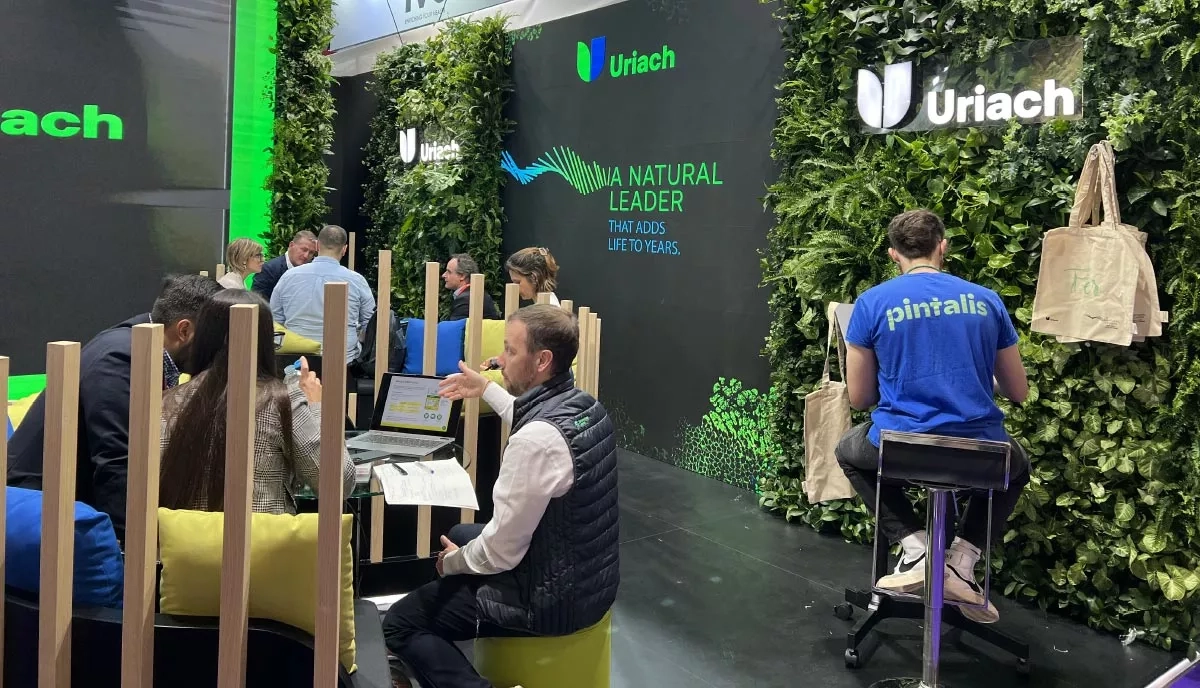
In an increasingly digital world, face-to-face connection proved to be the most powerful differentiator at Vitafoods Europe 2025. Booths were designed to spark conversation and invite relaxation with open layouts, calming decor, and tasting points that encouraged spontaneous engagement. Sales teams, not screens, carried the brand voice.
What stood out?
One exhibitor created a sensory-rich journey through key health domains like gut and immunity, combining lifestyle visuals, curated product stories, and human-led dialogue. Visitors weren’t just learning about ingredients, they were experiencing how those ingredients live in real life.
Insight
Connection is the new currency of B2B marketing. Create environments that slow people down, invite dialogue and interaction, and reflect your values. Start with taste, lead with storytelling, and design for interaction because the brands that stood out were the ones that made it easy to stop, stay, and start a conversation.
Image
02
Leading with science to stand out
Science was everywhere, but only a few brands made it meaningful. What distinguished them wasn’t just having evidence—it was how they structured, owned, and communicated it. When science becomes a foundation rather than a checkbox, it starts to drive real credibility.
What’s happening?
Everyone at Vitafoods 2025 claimed to be “science-backed”, it was the buzzword of the floor. But in practice, it’s no longer a true differentiator. With most brands referencing studies, real trust now depends on the depth and ownership of that science. The brands that stood apart weren’t just citing research, they were generating it, collaborating with universities, and embedding it into every layer of their story.
What stood out?
One exhibitor used proprietary trials and academic partnerships not just as proof points, but as part of their commercial offer, positioning their science as a platform for co-creation. In contrast to brands recycling generic data, they demonstrated what it means to own, update, and activate clinical evidence.
Insight
“Science-backed” is easy to claim and hard to prove. To stand out, it’s no longer enough to show you have evidence, you need to show where it came from, how it’s applied, and why it matters. Brands that invest in original research and bring it to life through clear, credible storytelling will be the ones that earn trust and stay ahead.
Image

Image
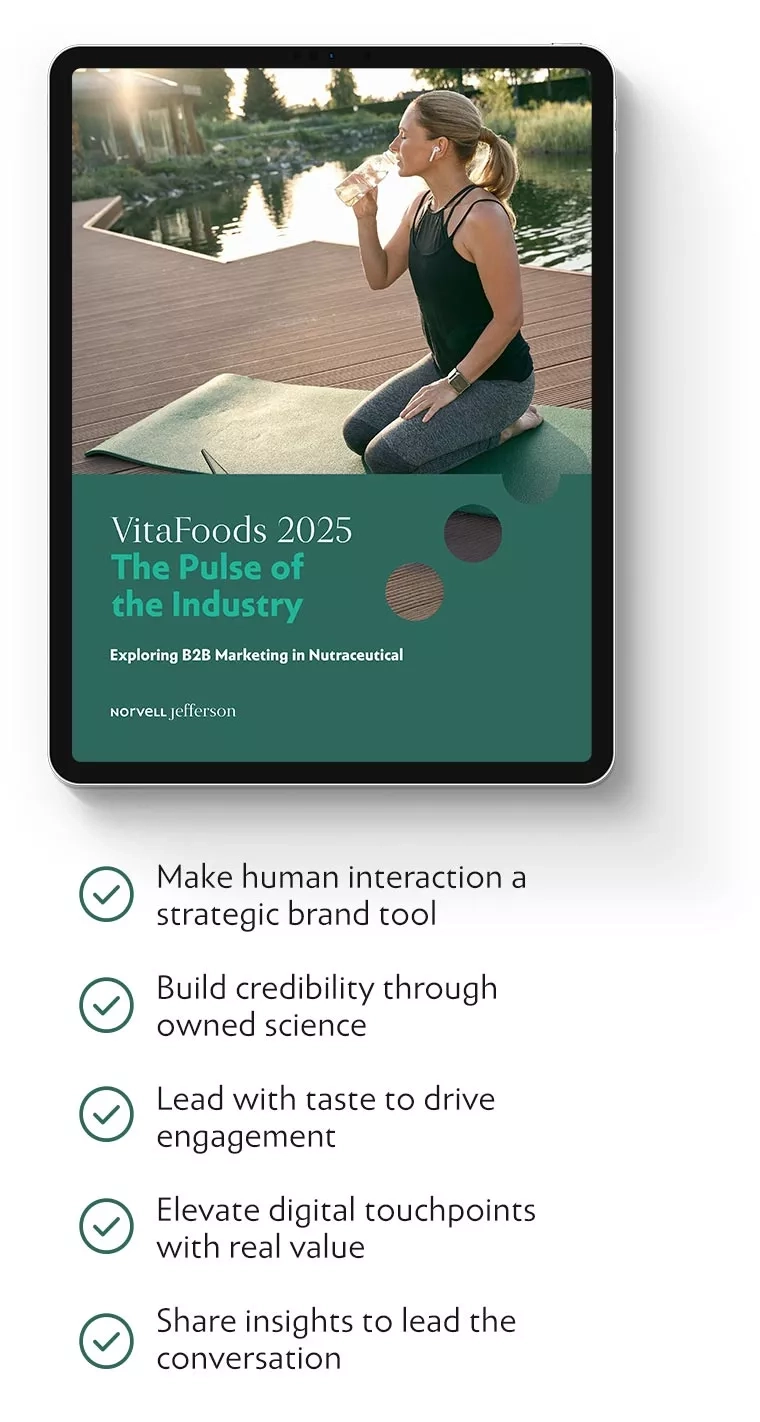
Vitafoods 2025 Trends Report
03
From pills to taste-driven prototypes
As health routines become more integrated into daily life, the delivery format matters as much as the function. Taste-led prototypes—gummies, shots, and bars—did more than showcase innovation; they turned benefits into experiences, making it easier for visitors to imagine real-world use.
What’s happening?
Formats are shifting—from traditional pills to everyday, food-inspired experiences. Across the show floor, gummies, shots, bars, and sachets took center stage. These formats aren’t just easier to consume—they reflect how health is moving into daily routines. Taste has become a key entry point for engagement, helping brands transform clinical function into lifestyle relevance.
What stood out?
An exhibitor showcased a focused women’s health range around prototypes for every life stage, from fertility to menopause. Their tasty citrus and berry shots weren’t just convenient, they embodied how science, taste, and life converge in modern health.
Insight
Taste is no longer optional, it’s essential. Prototypes are your pitch. Show how your science translates into products people want to take, and how your format fits into their lives. Innovation that’s enjoyable is innovation that sticks.
Image

04
Engaging experiences still finding its place
As brands become more skilled at creating immersive, sensory-driven spaces, expectations around digital interaction are rising too. But bringing that same level of engagement into tech-driven touchpoints remains a challenge. While the potential for deeper storytelling through digital tools is high, few brands are fully tapping into it.
What’s happening?
While taste-led experiences were finding their way across the show floor, digital engagement lagged. Many booths featured QR codes and screens, but few delivered true interactivity or immersion. The gap between digital potential and execution was clear.
What stood out?
One exhibitor used virtual reality to take visitors on a guided journey through their production process, from raw material sourcing to the transformation of ingredients. Instead of explaining it in words or visuals, they let attendees experience it firsthand, making a complex system feel tangible and credible.
Insight
If taste activates the senses, tech should activate curiosity. Use digital tools not as brochures, but as bridges, guiding visitors through your process, your people, or your proof in ways they’ll remember.
Image

05
Leading by sharing knowledge
In a landscape where bold claims are harder to make, clarity and perspective are what cut through. Thought leadership became a tool not just for visibility, but for building trust. Brands that framed the bigger picture, through research, insights, or education, positioned themselves as relevant long after the event ended.
What’s happening?
Expertise was on display across Vitafoods, not through product pitches, but through theatre sessions, ingredient zones, and low-key booth seminars. Brands weren’t just selling; they were contributing to the conversation, using their platforms to educate, interpret trends, and offer forward-thinking perspectives.
What stood out?
One standout session explored the link between microbiome health and emotional wellbeing, combining hard data with cultural insight to create a talk that was both informative and emotionally resonant. It showed how clinical relevance and consumer reality can meet in one narrative.
Insight
Thought leadership isn’t a single moment, it’s a mindset. The brands that stood out were those who informed before the event, showed up with substance, and kept the conversation going afterward. Don’t just share what you make, share what you know, and build a position that lasts beyond the booth.
Image
Looking ahead: lessons from Vita Foods 2025
Vitafoods 2025 showed that the future of nutraceuticals lies not just in what you offer, but in how you bring it to life, through story, format, and interaction. As science becomes expected and taste becomes strategic, the brands that will lead are those who can make complexity feel simple, and credibility feel personal.
This article offers a snapshot of what we saw, heard, and tasted, and how these insights can inspire your next move. For a deeper dive, download our full Vitafoods whitepaper and explore the strategies driving the future of nutraceutical marketing.
Image
Vitafoods 2025 Trends Report
Maddalena Prini
Senior Creative
Find out more

article
Fi Europe 2024: Trends shaping the future of food marketing
Fi Europe 2024 highlighted trends shaping the food industry, focusing on taste-driven innovation, functional foods, and cross-sector collaborations. Key themes included transforming technical solutions into sensory experiences, fostering meaningful connections through interactive booths, and combining health benefits with great taste. The event emphasized storytelling, thought leadership, and partnerships as critical for addressing challenges and driving progress in food marketing.
Image

case
Cargill Cocoa and Chocolate - positioning and branding
We blended science with sensory storytelling to reposition Cargill’s entire cocoa and chocolate portfolio as more than just ingredients.
The campaign captured attention and positioned Cargill as a leader in sensorial chocolate innovation.
Image

case
FrieslandCampina - product launch campaign
In this project, we embarked on a creative journey to differentiate the product in a highly competitive market where all products tend to look the same. Our strategy emphasized visually unique content and a captivating narrative to stand out from the crowd.
Image

case
Gerkens Cocoa Powders - rebranding
Gerkens Cocoa Powders is on a mission to refresh their image, aiming to solidify their status as a top cocoa brand. This makeover is designed to align with modern values, focusing on sustainability, quality, and ethical practices, all while celebrating Gerkens' rich history in cocoa expertise. The vision was to create a brand that resonates with today's values, showcasing a commitment to good practices, from sustainable sourcing to ethical production and positive community impact. This approach intends to transform Gerkens into a brand recognized not just for superior quality but also for its dedication to making a global difference, leading the cocoa industry towards a more sustainable and ethically responsible future.
Video file
case
Heineken - branding and positioning
We created a new, unified look and marketing story for Heineken’s entire portfolio, aligning B2B and B2C communications.
The global campaign reinforced Heineken’s leadership in draught innovation and aligned B2B and B2C messaging.
Image
case
Symrise - product launch campaign
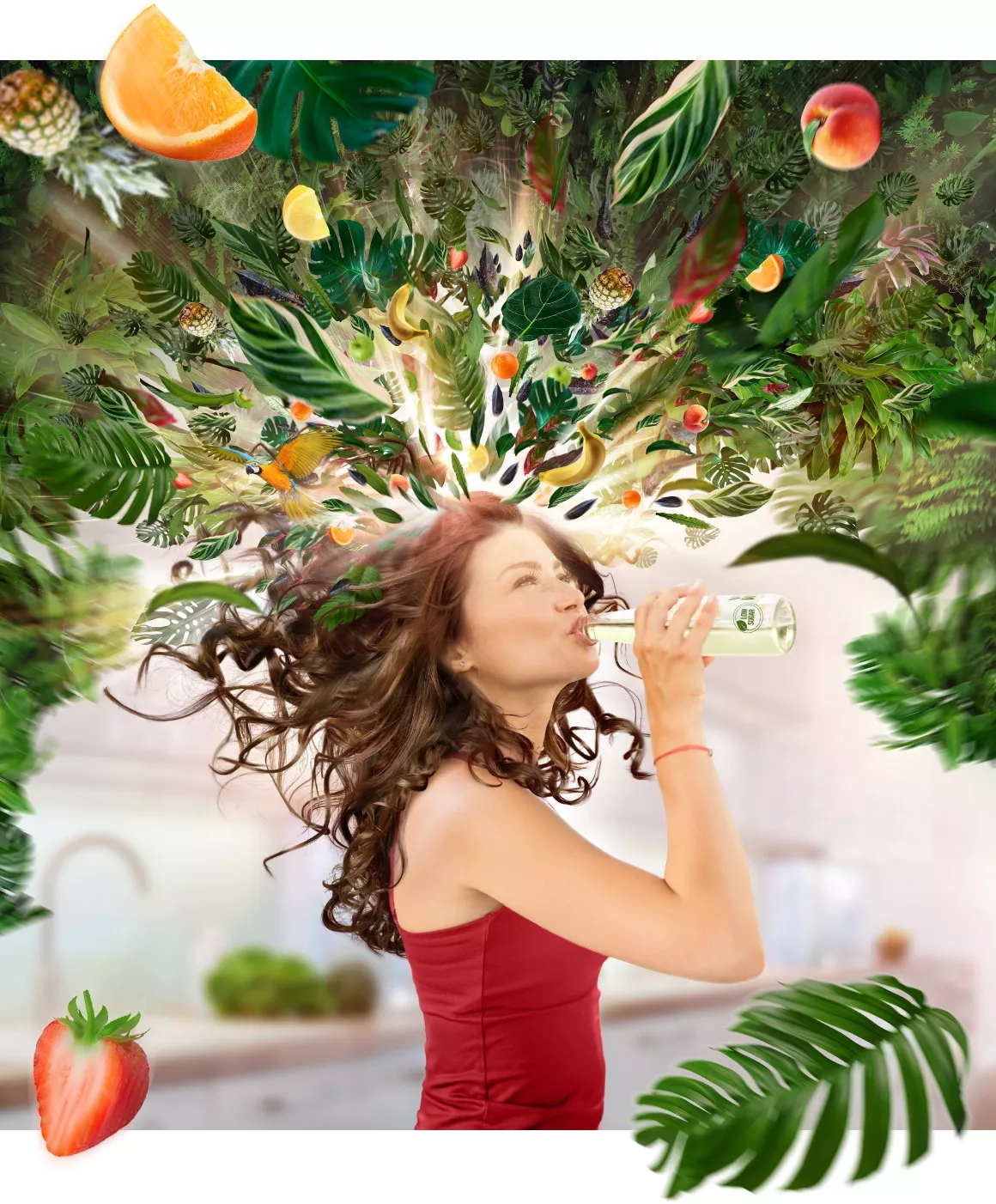
We created an awareness campaign for Symrise’s Symlife Natural Taste Balancing Solutions, helping brands make healthier products without losing great taste.
The launch increased brand visibility and reinforced Symrise’s role in shaping better-tasting, healthier products.