Video file
Image

Best healthcare marketing campaigns: 12 client cases that made complex science matter
Best Healthcare Marketing Campaigns: 12 Standout Client Cases (2026)
Summary
Best Healthcare Marketing Campaigns: 12 Standout Client Cases (2026) showcases how pharmaceutical, medtech and healthcare brands turn complex science into clear, credible and memorable communication. From disease awareness and product launches to diagnostics, public health and experiential campaigns, these cases demonstrate how strategic creativity can connect evidence with real human relevance. Together, they show how strong healthcare marketing builds understanding, earns trust and inspires meaningful action.
Summary
Best Healthcare Marketing Campaigns: 12 Standout Client Cases (2026) showcases how pharmaceutical, medtech and healthcare brands turn complex science into clear, credible and memorable communication. From disease awareness and product launches to diagnostics, public health and experiential campaigns, these cases demonstrate how strategic creativity can connect evidence with real human relevance. Together, they show how strong healthcare marketing builds understanding, earns trust and inspires meaningful action.

Olivia Taylor
Content Marketeer
The best healthcare marketing campaigns do more than attract attention. They make something difficult easier to understand, give evidence a human consequence, and create a reason to act.
That is difficult in a category where audiences are overloaded, claims are closely scrutinised, and much of the communication looks and sounds the same. A strong healthcare campaign must be scientifically credible, emotionally precise and useful in the real world. It also needs an idea distinctive enough to be remembered.
This selection brings together twelve campaigns created by Norvell Jefferson for pharmaceutical, medtech and healthcare organisations. We have deliberately focused on our own work. Not because these are the only healthcare campaigns worth studying, but because these are the cases we can examine from the inside: the original challenge, the strategic choices, the creative development, the activation and, where available, the results.
It is not an awards ranking. It is a practical review of how these campaigns turned complex information into something people could recognise, feel or use. Throughout the article, the cases also reveal wider trends shaping healthcare communication in 2026, from proof over promise and greater transparency to more relevant, participatory experiences.
The campaigns at a glance
Select a campaign to jump to the full case.
- OMRON:The Sound of AFib (Disease awareness)
- BD Kiestra: The Future Is Now (Medtech product storytelling)
- Sakura SmartConnect: Meet S.A.R.A. (Product launch)
- LivaNova: Essenz, The Wisdom of Breath and Beat (Product launch and brand platform)
- Novartis: Beyond Psoriatic Skins (Disease awareness)
- Janssen: Cold Chain Awareness (Scientific and operational communication)
- Health House: Planet Virus (Public health education)
- Stryker: Inflating AED Awareness (Experiential awareness)
- Sandoz: Dreams Grow. Every Day. (Omnichannel pharma campaign)
- Kuraray Noritake: The New Era of Mastery (Dental product campaign)
- Hologic: Time to Think Ahead (Molecular diagnostics digital experience)
- Novartis: SpArrow, The Art of Finding Back Pain (B2B technology brand architecture)
How we selected these healthcare campaign examples
A memorable idea is not enough. Each campaign in this list was assessed against five questions:
This overview is not intended as a definitive ranking, but as a curated selection of agencies recognised for their creative quality, strategic thinking, client impact, and position within their respective fields. Because agencies operate across very different disciplines, scales, business models, and specialisations, direct comparison is never entirely equal. The order should therefore not be seen as a fixed hierarchy where number one is objectively "better" than number fifteen or twenty-five. Many agencies featured here are leaders within their own niche, category, or area of expertise, each bringing distinct strengths and influence to the industry.
- Was the idea grounded in a real healthcare challenge? The campaign needed to address an audience need, clinical issue, workflow pressure or awareness gap.
- Did the creative expression make complexity clearer? Science should become easier to understand without being reduced to an empty slogan.
- Was the human relevance specific? Generic emotion is easy to produce and easy to ignore. Strong work connects evidence to a recognisable person, moment or decision.
- Did the campaign have a distinctive organising idea? The execution should feel ownable by the client, not interchangeable with another healthcare brand.
- Could the idea travel across formats and channels? A strong platform should support film, digital content, social activation, events, sales conversations or earned media without losing its meaning.
These criteria reflect the wider shifts explored in our 2026 healthcare marketing and communication trends report. More content does not automatically create more trust. Communication becomes stronger when proof is clear, relevance is earned and the reality behind the message remains visible. The campaigns below are our own practical evidence of what those shifts can look like in real briefs, real creative work and real activation.
01. OMRON: The Sound of AFib
Atrial fibrillation can be difficult to recognise because it may develop without obvious warning. OMRON wanted to increase awareness of AFib and encourage people to take heart monitoring more seriously. The challenge was to make an often silent condition tangible without turning the campaign into another piece of clinical explanation.
The idea was to use the heartbeat itself as the creative material. An irregular rhythm from a real patient was translated into a musical composition. The campaign centred on Marie, whose experience gave the medical issue a specific human context. Her heartbeat was not used as a decorative device. It became the structure of the story.
That choice created an immediate bridge between data and emotion. People did not only read that AFib is irregular. They could hear it. Expert insight, patient experience and monitoring technology came together in one expression that worked across documentary film, educational content, social media and public relations.
The first media wave reached more than 217 million readers and viewers through 361 media placements, with more than half of the coverage coming from broadcast media.
Why it worked:
The campaign did not add emotion to the science. It found the emotion already present in a real heartbeat and made it audible.
The lesson for healthcare marketers:
When a condition is difficult to see, look for a truthful sensory expression of the evidence. Sound, movement or interaction can make clinical information easier to recognise without weakening its credibility.
View the OMRON AFib awareness campaign View all case studies.
Image

02. BD Kiestra: The Future Is Now
Laboratory automation is usually communicated through throughput, specifications and system architecture. Those details matter to decision-makers, but they do not explain why the technology matters beyond the laboratory.
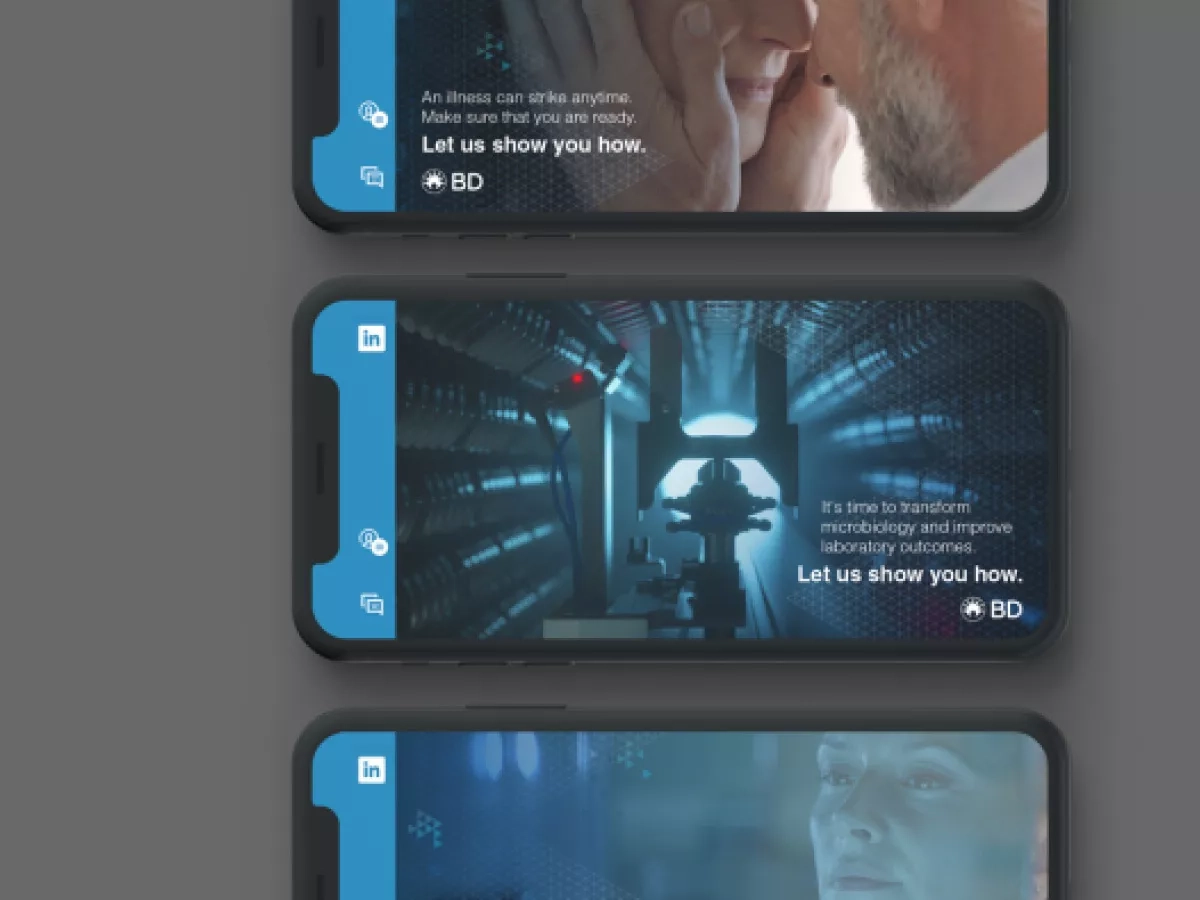
For BD Kiestra, the campaign shifted the centre of gravity. Instead of treating automation as the destination, it showed what faster and more consistent microbiology workflows can mean for professionals and patients. The story connected the system to the people waiting for an answer, and to the laboratory teams working under pressure to provide one.
A cinematic visual world and detailed 3D animation helped make the technology visible. Yet the campaign did not remain inside the machine. The product story was structured around a wider vision of laboratory transformation, bringing technical proof and human consequence into the same narrative.
The platform was developed across film, a digital experience, social content and product communication. That consistency mattered. It allowed BD Kiestra to explain a complex proposition at different levels of depth without losing the central idea.
Why it worked:
It translated a feature-led product story into an outcome-led healthcare story. The system remained central, but its value was expressed through the decisions, workflows and patients it affects.
The lesson for healthcare marketers:
Technical audiences still need meaning. Lead with the real operational or clinical change, then use the specifications to prove it.
View the BD Kiestra product launch campaign View all case studies.
Image
03. Sakura SmartConnect: Meet S.A.R.A.
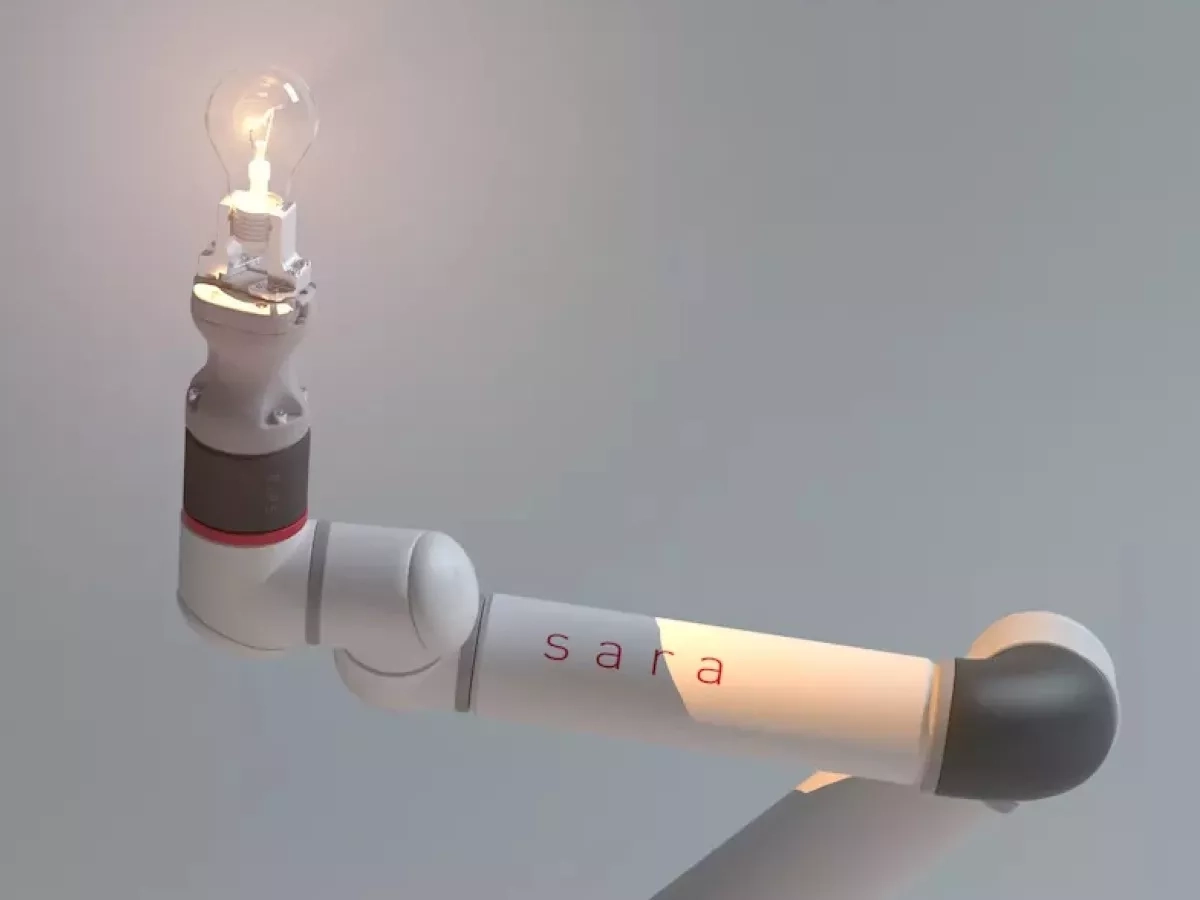
Sakura introduced a collaborative robotic arm designed to close gaps in laboratory automation and reduce repetitive manual work. The technical value was clear. The emotional barrier was less visible. Automation can quickly be interpreted as replacement, especially when people do not understand how it will fit into their daily work.
The campaign responded by giving the technology a role, a name and a personality. S.A.R.A. stood for Sakura's Autonomous Robotic Assistant. The product was presented as a colleague that supports laboratory professionals, not a machine that removes them from the process.
This was more than naming. The identity shaped the launch story, visual language and interaction. A digital introduction and live Q&A allowed audiences to meet the technology in a more open and approachable way during a period when a conventional physical launch was difficult.
The line Automating processes, not relationships clarified the strategic position. It acknowledged the concern instead of avoiding it. That made the product promise more credible.
Why it worked:
The campaign made an unfamiliar technology easier to understand without pretending it was human. The persona gave people a simple way to discuss what the robotic assistant does and how it fits into the laboratory.
The lesson for healthcare marketers:
When innovation creates anxiety, communication should not only celebrate the technology. It should show the role the technology plays in relation to the people who use it.
View the Sakura SmartConnect launch campaign View all case studies.
Image
04. LivaNova: Essenz, The Wisdom of Breath and Beat
A perfusion system brings together sophisticated hardware, software, data and clinical expertise. Explaining all of those elements separately can produce a complete product story that is difficult to remember.
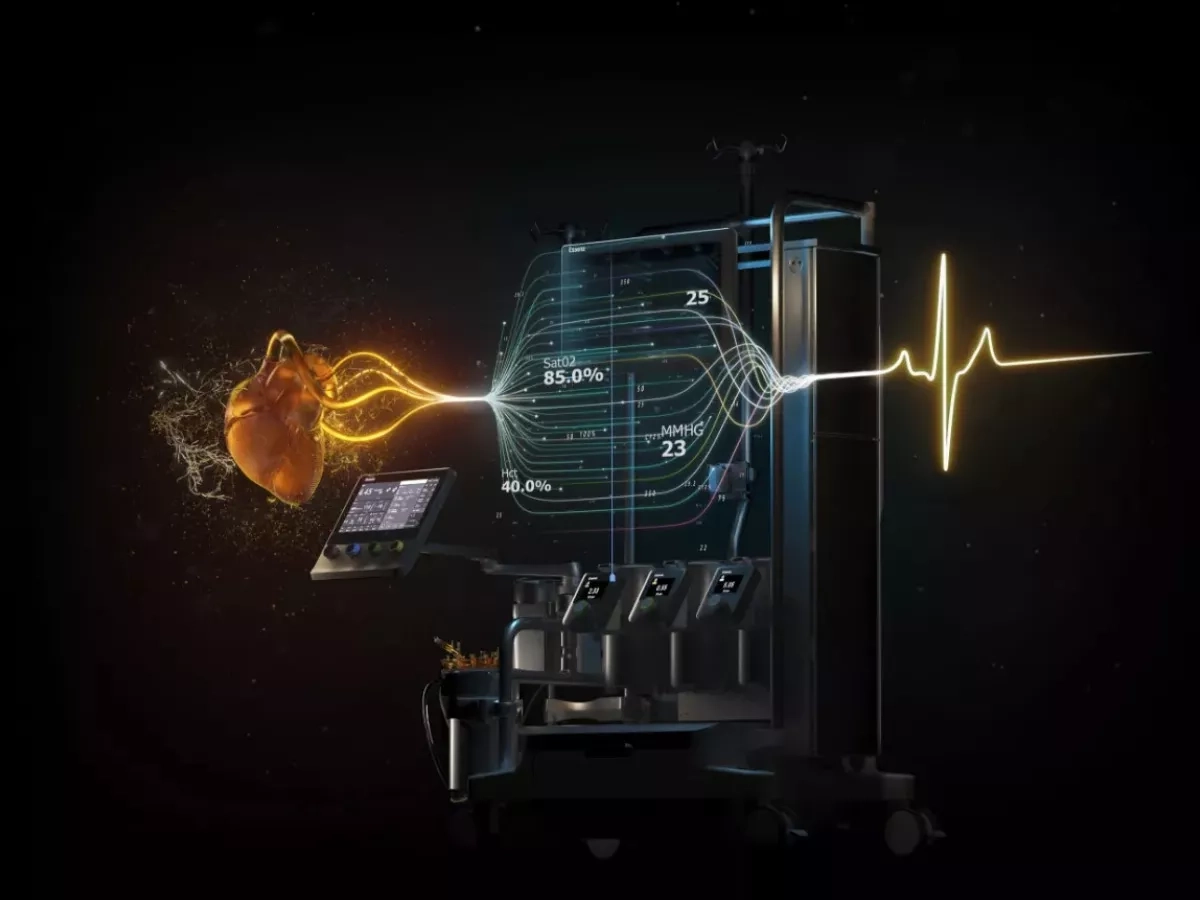
For LivaNova's Essenz system, the campaign needed a unifying idea. The Wisdom of Breath and Beat connected the technology to the two vital rhythms at the centre of cardiopulmonary care. It gave the product a language that felt clinically relevant, emotionally grounded and broad enough to support the complete system.
The visual identity used movement, light and connected sequences to express flow, intelligence and coordination. The result was not a layer of emotion placed over a technical product. It was a way to organise the product's complexity around a truth the audience already understands.
That platform could then support brand communication, launch assets, product storytelling and the wider connected operating-room narrative. Each execution had a clear relationship to the same central thought.
Why it worked:
The idea simplified the story without simplifying the product. It gave multiple features one coherent meaning and made the system easier to recall.
The lesson for healthcare marketers:
Complex portfolios need more than a list of benefits. Find the underlying principle that connects the parts and gives the audience a mental model for the whole.
View the LivaNova Essenz campaign View all case studies.
Image
05. Novartis: Beyond Psoriatic Skins
Psoriasis is visible on the skin, but its effects are not limited to what other people can see. The condition can influence confidence, relationships, work and daily life. A campaign that focuses only on visible symptoms risks repeating the same narrow view it is trying to challenge.
Beyond Psoriatic Skins made the hidden experience visible. Working with real patients, the campaign projected imagery onto their skin to express the broader physical and emotional reality of the condition. The body became both the subject and the medium.
The visual device was striking, but it remained tied to patient testimony. That distinction matters. The projections were not used to dramatise psoriasis from the outside. They helped patients communicate what the condition meant from the inside.
The result moved beyond a familiar before-and-after treatment narrative. It created a disease-awareness platform that invited healthcare professionals and wider audiences to look beyond the most obvious symptom.
Why it worked:
The execution was visually distinctive because it was built on a genuine insight. It revealed a gap between what is visible and what is lived.
The lesson for healthcare marketers:
A condition should not be reduced to its most photographable symptom. Strong disease-awareness work gives language and form to the parts of the experience that are usually overlooked.
View the Novartis psoriasis awareness campaign: View all case studies.
Image

06. Janssen: Cold Chain Awareness
The journey of a temperature-sensitive medicine from production to patient is complex. Much of the work happens behind the scenes, which means reliability is often communicated as a claim rather than demonstrated as a process.
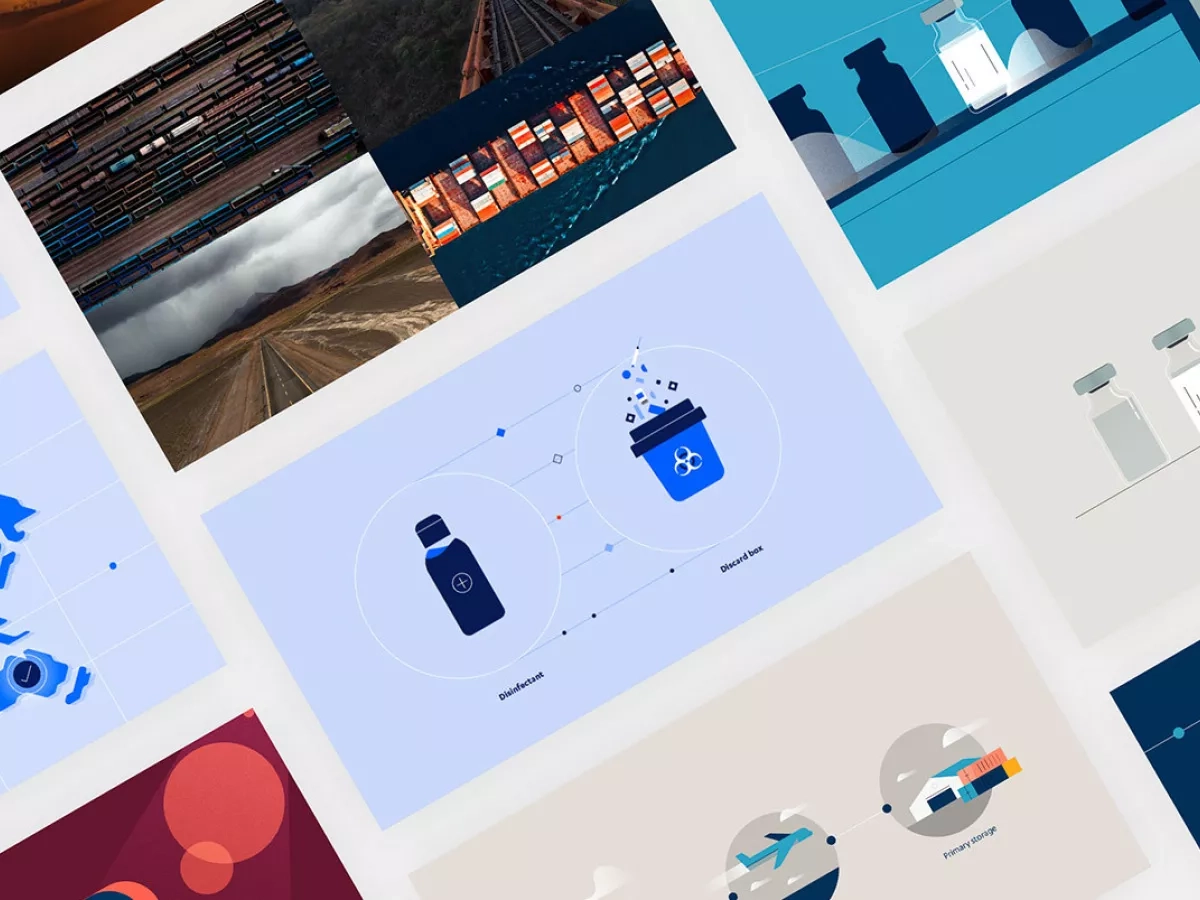
Janssen's cold chain campaign opened that process. Research, live action and animation were used to map how a product is stored, transported and monitored under ultra-cold conditions. The campaign showed the people, systems and decisions involved in protecting the medicine throughout its journey.
Importantly, the story did not depend on an image of perfect control. It also made the risk visible. Explaining what can go wrong, and showing how protocols are designed to detect and manage it, created a more credible account of safety than a broad promise of reliability.
The operational detail became the evidence. A subject that could have remained technical and internal was translated into a story about professional responsibility and patient protection.
Why it worked:
Transparency was not treated as a brand value. It was created by showing how the work actually happens.
The lesson for healthcare marketers:
Behind-the-scenes processes can be powerful communication assets. When trust depends on operations, reveal the decisions, safeguards and expertise that make the outcome possible.
View the Janssen cold chain awareness campaign View all case studies.
Image
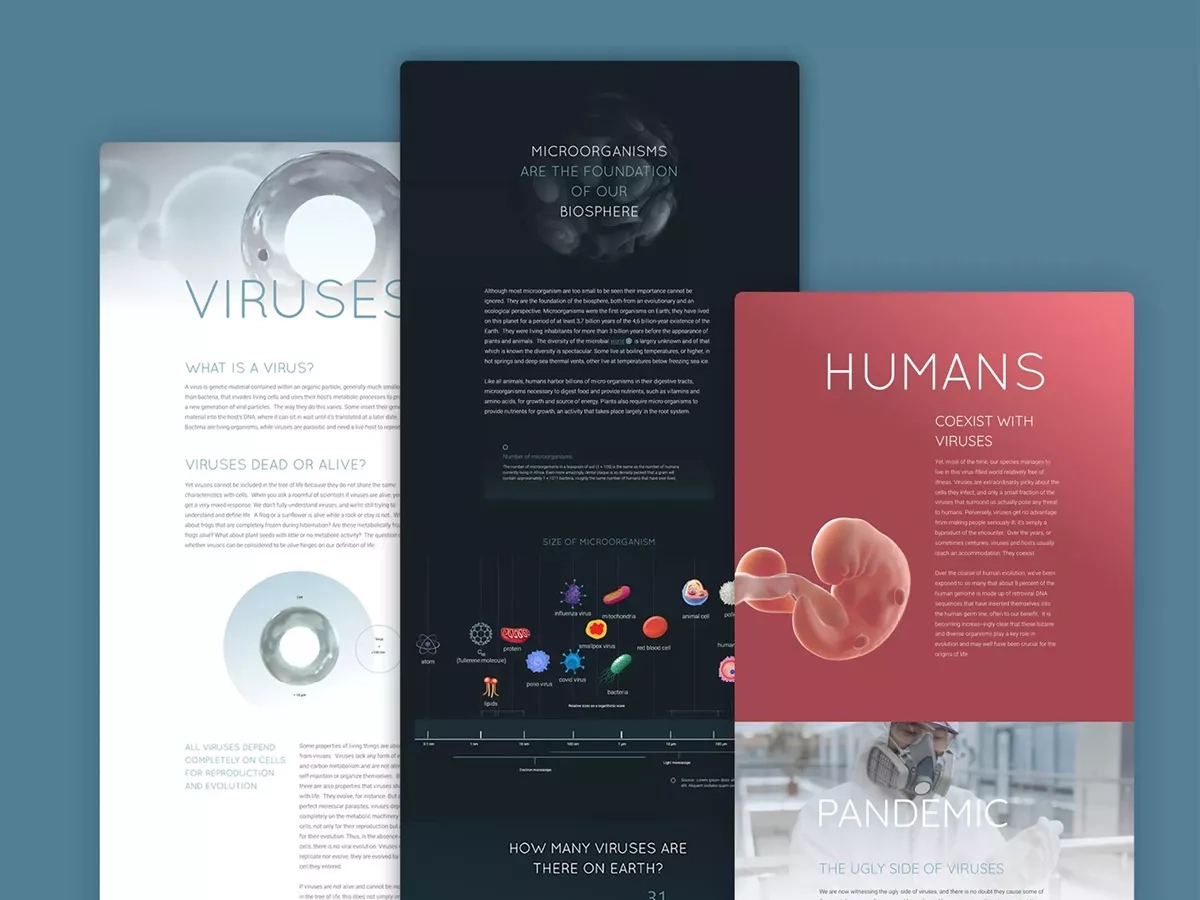
07. HealthHouse:PlanetVirus
Public understanding of viruses often rises during a crisis and fades when the immediate threat recedes. Health House wanted to create an educational platform that could build knowledge about viruses, pandemics and preparedness in a way that remained engaging beyond a single news cycle.
Planet Virus turned the subject into an interactive world. Scientific content was combined with spatial storytelling, digital interaction and expert discussion. Visitors could explore rather than simply receive information.
That format changed the relationship with the audience. A conventional exhibition panel explains. An interactive environment lets people discover connections, test assumptions and continue the conversation. It made the science more accessible without removing its complexity.
The project also created a platform for panels and dialogue, extending the experience beyond the physical installation. This helped position Health House as a place where healthcare, technology and public debate could meet.
Why it worked:
The campaign was designed around participation. It gave audiences a role in the learning process and made an abstract global issue feel immediate.
The lesson for healthcare marketers:
Education becomes more memorable when people can navigate the story themselves. Use interaction where it creates understanding, not simply novelty.
View the Health House Planet Virus experience View all case studies.
Image
08. Stryker: Inflating AED Awareness
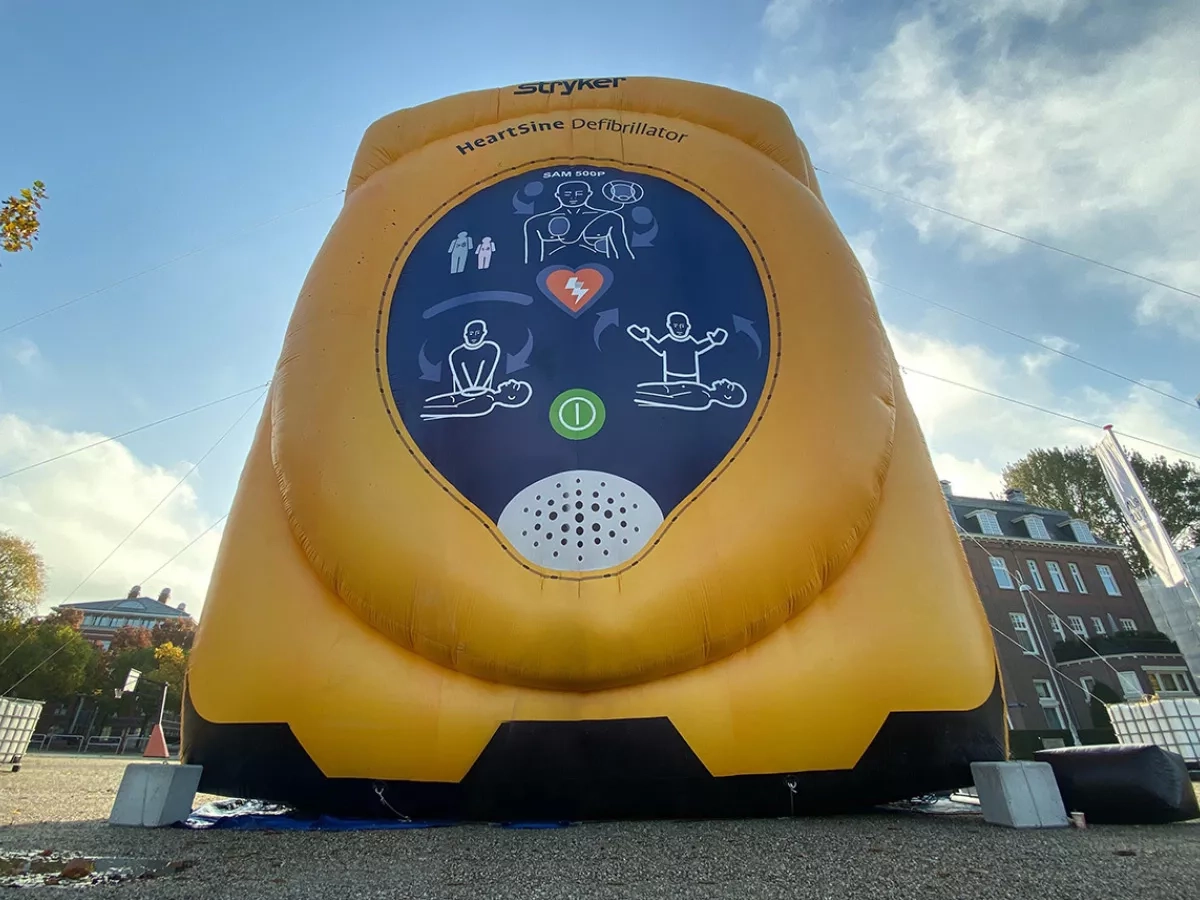
Automated external defibrillators save lives, but many people still do not know where to find one or feel confident using it. The communication challenge was not a lack of information. It was a lack of attention and practical familiarity.
Stryker placed a ten-metre inflatable AED on Amsterdam's Museumplein. The scale turned a device people often overlook into a public landmark. It created curiosity from a distance and a reason to approach.
The physical installation was supported by workshops and online amplification. That combination was important. The spectacle earned attention, while the educational activity turned attention into useful knowledge. The campaign did not stop at being photographed. It created an opportunity for people to learn what an AED is and how it can be used.
The idea also carried the product's visual form into the experience. The object itself became the media channel.
Why it worked:
It used scale to interrupt everyday behaviour, then connected that interruption to a clear public-health action.
The lesson for healthcare marketers:
Experiential work should give people something to do, understand or practise. Attention is only valuable when the next step is clear.
View the Stryker AED awareness activation View all case studies.
Image
09. Sandoz: Dreams Grow. Every Day.
Sandoz needed to defend the value of daily Omnitrope administration in a market increasingly drawn to newer weekly growth hormone treatments. The evidence around safety, efficacy and reliability was important. The communication challenge was to make the advantage of daily care relevant rather than allowing the discussion to remain a simple comparison of treatment frequency.
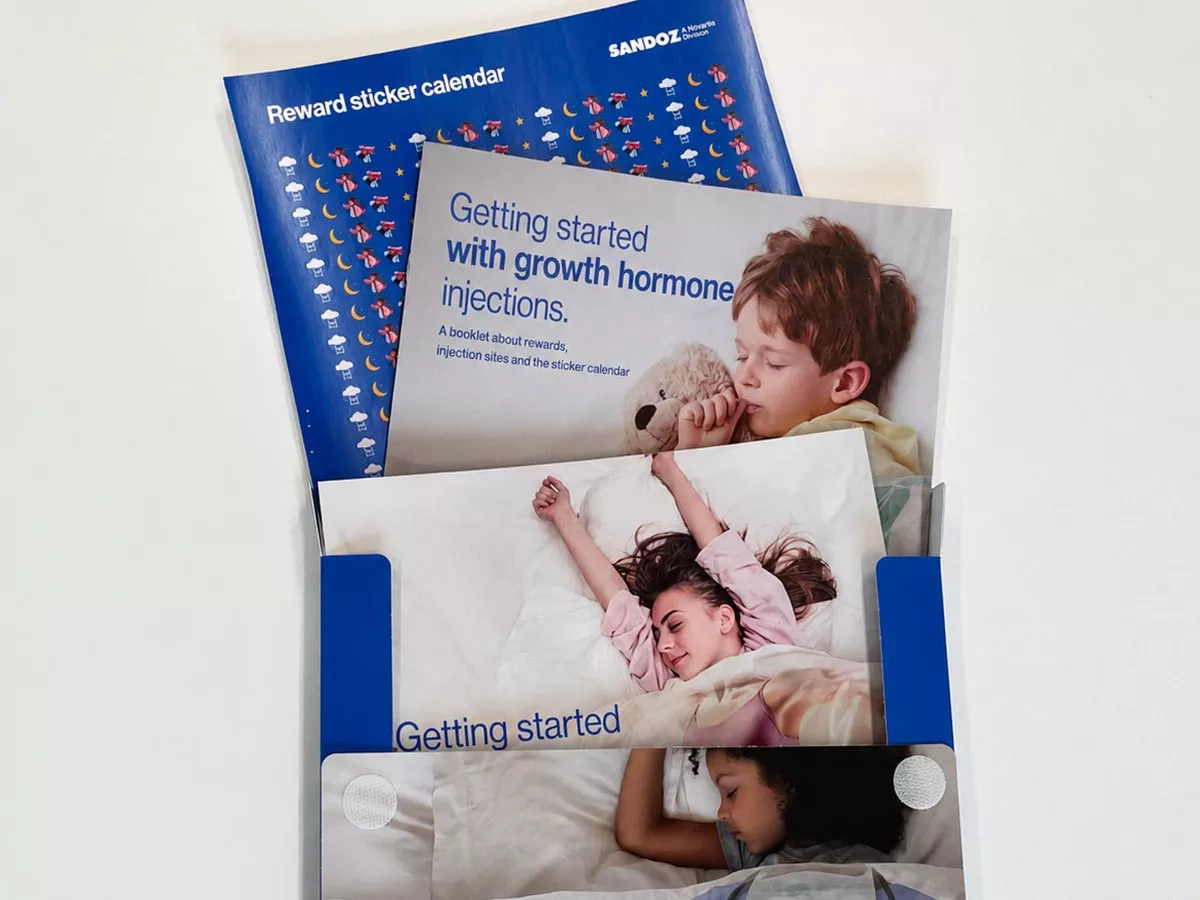
The strategic starting point was that every day makes a difference. Daily administration was connected to the body's natural rhythm and to the consistent routines through which long-term care is built. The creative idea then moved into an intimate, recognisable moment: sleep. The nightly routine became a bridge between treatment and the dreams, confidence and future ambitions of young patients.
That idea supported an integrated omnichannel campaign. Key visuals, social content, brochures, start kits, a growth calendar, posters, event materials and sales tools all carried the same story. The platform could speak to healthcare professionals, caregivers and families without fragmenting into separate messages.
Why it worked: It reframed a functional dosing argument as a story about consistency. The campaign did not avoid the clinical proposition. It made the proposition meaningful through a daily ritual people could recognise.
The lesson for healthcare marketers: When a product advantage sounds technical or inconvenient, connect it to the human benefit created by that behaviour. The emotional story should clarify the evidence, not distract from it.
View the Sandoz Omnitrope campaign View all case studies.
Image
10. Kuraray Noritake: The New Era of Mastery
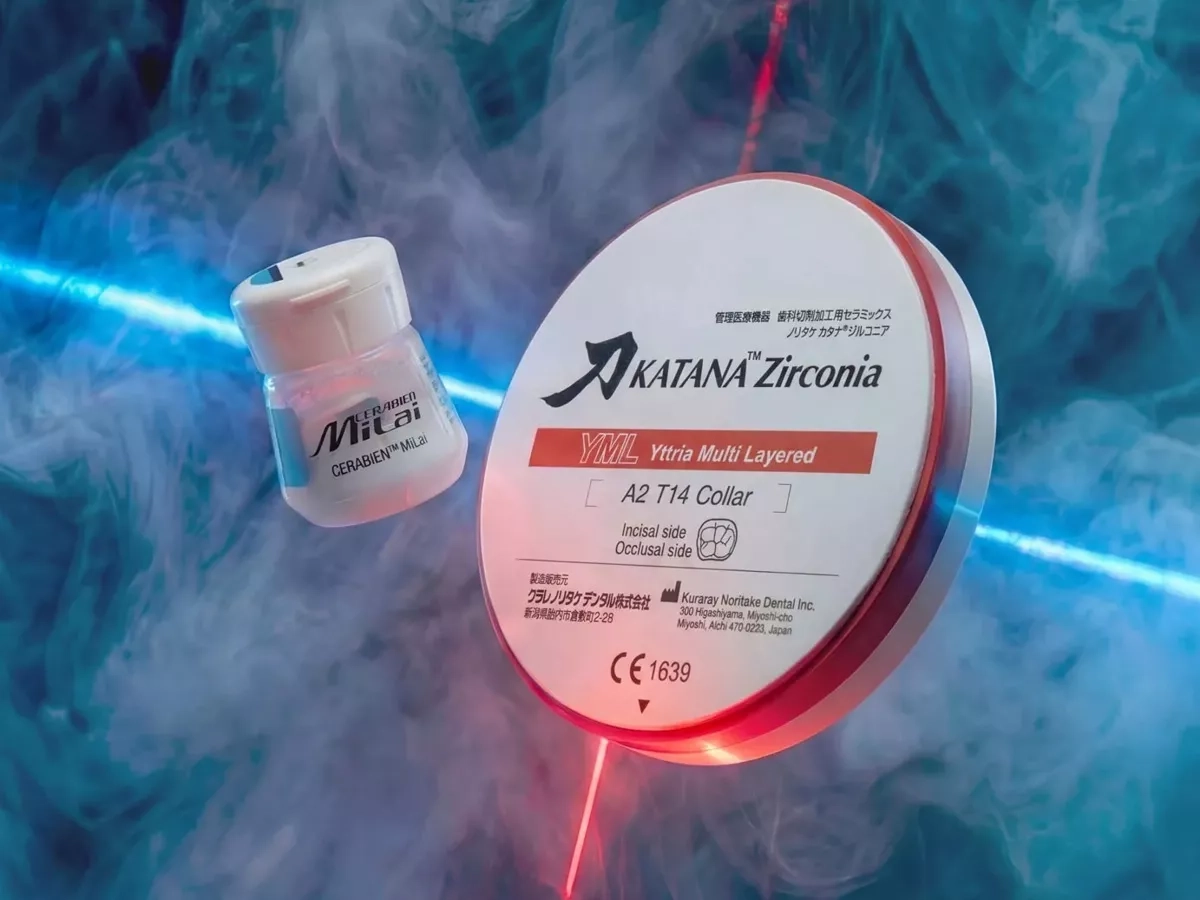
Kuraray Noritake wanted to build long-term awareness for KATANA™ YML zirconia and CERABIEN™ MiLai in a dental market where technical product claims can quickly become interchangeable. The opportunity was not only to communicate material performance. It was to show what the integrated system enables for the dental technicians who use it.
The strategy began with a real professional tension. Dental technicians want every restoration to carry their signature, yet growing workloads and rising expectations leave less time for craft. YML and MiLai were positioned as one streamlined system that reduces process complexity and sensitivity to mistakes, allowing technicians to focus more confidently on precision and personal expression.
The campaign celebrated a bold new generation of dental technicians through character-driven portraits and abstract graphic elements influenced by cyberpunk aesthetics. Four visual storylines translated the master narrative and the system's value pillars into key visuals, social assets, video, animation and booth design.
A phased SEE-THINK-DO rollout gave the campaign depth. The first stage built identity and attention. KOLs and working technicians then added proof by showing the system in practice. Product benefits and hands-on tools created a clear route toward adoption.
Why it worked:
It turned a technical product combination into a professional identity story, while keeping that story anchored in workflow improvement and consistent precision.
The lesson for healthcare marketers:
Specialist B2B audiences are not motivated by specifications alone. Pride, identity and mastery can create a powerful campaign platform when the product genuinely gives professionals more control over their work.
View the Kuraray Noritake dental product campaign View all case studies.
Image
11. Hologic: Time to Think Ahead
Molecular diagnostic laboratories face rising demand, workforce shortages and growing complexity. Hologic wanted to show that leadership in diagnostics is not only about providing technology for today's tests. It is about helping laboratories anticipate what will matter next.
The digital experience campaign was organised around one forward-looking idea: Time to think ahead. Hologic was positioned as a partner that combines instrumentation, expertise and insight, helping laboratories move from reacting to immediate pressure toward shaping the future of molecular diagnostics.
Panther® became more than the centre of a product message. It was presented as part of a broader solution that connects technology with guidance, confidence and responsibility for better health outcomes. The same campaign platform was then adapted across Instrumentation, Respiratory, GI and Cervical Health, giving each topic its own story without losing the common strategic direction.
A SEE-THINK-DO structure guided audiences from awareness to understanding and action. Social assets, emailers, articles and webinar content created a connected journey rather than a collection of isolated digital materials. Global assets could also be translated into locally relevant activations.
Why it worked:
The campaign created one coherent narrative across several diagnostic areas and touchpoints. It gave Hologic a role beyond technology provider: a partner that helps laboratories see and prepare for what comes next.
The lesson for healthcare marketers:
A digital experience is not defined by the number of assets. It becomes valuable when every asset advances the same audience journey and strengthens one recognisable idea.
View the Hologic molecular diagnostics digital experience View all case studies.
Image

12. Novartis: SpArrow, The Art of Finding Back Pain
Axial spondyloarthritis can take years to diagnose. Back pain is common, symptoms can be difficult to describe, and the path from patient to the right specialist is not always direct. Novartis needed to increase awareness among patients and general practitioners and support earlier referral to rheumatology.
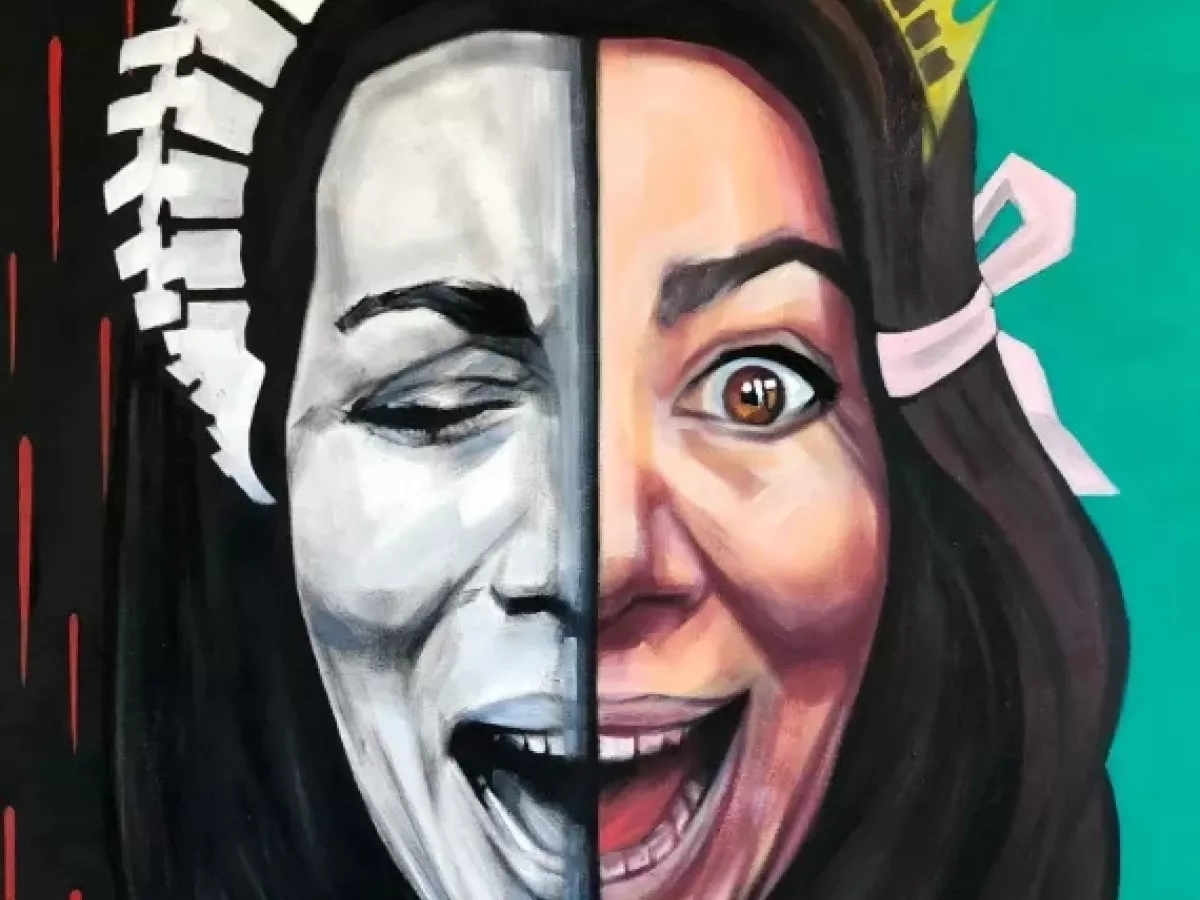
The campaign began with patient interviews. Their descriptions of pain were then translated by an artist into visual works. The result was SpArrow, a creative language for an experience that is real but difficult to see.
Art was not used to make the condition more attractive. It was used as an interpretive tool. The images gave patients and healthcare professionals a new point of reference for discussing the character and persistence of the pain.
The campaign therefore worked at two levels. It created attention through an unexpected visual form, and it supported recognition by grounding that form in lived patient experience.
Why it worked:
It gave an invisible symptom a shared language. That made the communication more distinctive and the clinical conversation more concrete.
The lesson for healthcare marketers:
When patients struggle to explain an experience, creative interpretation can help. The work must begin with listening, and the expression must remain accountable to what people actually said.
View the Novartis SpArrow disease-awareness campaign View all case studies.
Image
What the best healthcare marketing campaigns have in common
These campaigns use different formats, audiences and creative disciplines. The pattern beneath them is consistent.
They begin with a real tension
The strongest ideas do not begin with the channel. They begin with a problem people recognise. AFib is hard to hear. Laboratory automation can feel threatening. Psoriasis is more than a visible skin condition. Cold-chain reliability is difficult to verify from the outside.
A precise tension gives the campaign a reason to exist.
They turn proof into meaning
Evidence matters, but evidence without interpretation remains distant. BD Kiestra connected automation to patient impact. Janssen made reliability visible through operational detail. Sandoz connected daily administration to consistent care. OMRON transformed a real heartbeat into an experience people could understand immediately.
The creative idea does not replace proof. It helps proof travel.
They make the human context specific
Healthcare campaigns often use familiar images of patients and professionals to signal empathy. That is not the same as understanding. Specificity comes from real experiences, real workflows and real decisions.
Marie gives The Sound of AFib its meaning. Patient testimony gives Beyond Psoriatic Skins its legitimacy. Laboratory concerns give S.A.R.A. her role. The professional pride of dental technicians gives Kuraray Noritake its creative world.
They are recognisably different for a reason
Distinctive work is not created by avoiding blue or choosing unusual typography. It comes from finding an expression competitors cannot use with the same honesty. The heartbeat belongs to the AFib story. The giant AED belongs to the awareness problem. The cold-chain journey belongs to the operational proof. Hologic's forward-looking platform belongs to laboratories being asked to prepare for what comes next.
The difference is strategic before it is visual.
They create value beyond exposure
A campaign should leave the audience with more than recognition of the brand. It can create understanding, encourage monitoring, support a referral, increase confidence or open a professional conversation.
That is the difference between reach and relevance.
These principles are explored in more depth in our 2026 Healthcare Marketing and Communication Trends report. The report explains why proof, emotion, transparency, differentiation, relevance, experience and earned influence are becoming more important as healthcare audiences filter out generic communication.
2026 Healthcare Marketing and Communication Trends report: View all case studies.
Frequently asked questions about healthcare marketing campaigns
What are some examples of successful healthcare marketing campaigns?
Examples include OMRON's The Sound of AFib, BD Kiestra's The Future Is Now, Sakura SmartConnect's Meet S.A.R.A., Sandoz's Dreams Grow. Every Day., Hologic's Time to Think Ahead and Kuraray Noritake's The New Era of Mastery. Each campaign uses a different creative approach, but all translate complex healthcare information into something patients, healthcare professionals or decision-makers can recognise, understand and act on.
What makes a healthcare marketing campaign effective?
An effective healthcare campaign combines a real audience insight, verifiable evidence, a clear creative idea and a useful next step. It should make a complex subject easier to recognise without oversimplifying it.
Can healthcare marketing be emotional and still remain credible?
Yes. Emotion is credible when it grows from evidence and lived experience. Patient stories, clinical outcomes and workflow improvements already contain human meaning. The task is to reveal it accurately, not manufacture it.
How can a healthcare brand avoid generic communication?
Start by identifying what is genuinely true about the organisation, product or audience problem that competitors cannot claim in the same way. Build the idea around that truth rather than around familiar category language or imagery.
How should healthcare campaigns be measured?
Start by moving beyond vanity metrics. Impressions, views and clicks can indicate soft awareness, but they do not show whether a campaign changed understanding, influenced a decision or created value. Measurement should follow the campaign's purpose and connect attention to meaningful outcomes, such as qualified engagement, knowledge change, resource use, referrals, event participation, sales enablement or behavioural action.
How long should a healthcare campaign run?
There is no universal duration. A product launch may have a concentrated activation period, while professional education usually requires sustained communication. Disease awareness should be treated as always-on. Conditions do not disappear when a campaign flight ends, and neither does the need for clear, credible information.
About this selection
This article deliberately focuses on healthcare campaigns created by Norvell Jefferson. We selected our own work because these are the campaigns we can examine from the inside: from the original challenge and strategic choices to creative development, activation and, where available, measurable results.
This is not intended as a definitive global ranking or a sponsored comparison. It is a curated selection of campaigns that demonstrate different ways to make complex healthcare subjects clear, relevant and memorable.
Last updated: July 28, 2026
Build a healthcare campaign people can believe
Healthcare audiences do not need another broad promise. They need communication that stays close to the evidence, respects their reality and gives them a reason to pay attention.
Norvell Jefferson helps pharmaceutical, medtech and healthcare organisations turn complex science into brands, campaigns and experiences that people can understand, remember and act on.
Talk to our healthcare marketing team View all case studies.
Olivia Taylor
Content Marketeer
Find out more

article
HIMSS 2025 - Connecting Intelligence
The healthcare industry is experiencing a fundamental transformation, where technology is no longer just a support function—it is becoming the backbone of healthcare operations, decision-making, and patient care. At HIMSS25, it became clear that AI, interoperability, and cybersecurity are not just industry buzzwords; they are rapidly shaping the future of healthcare. For actionable insights, explore our detailed HIMSS 2025 Marketing Insight Report.

article
Vitafoods 2025: Trends shaping the future of Nutraceutical marketing
Vitafoods Europe 2025 spotlighted a nutraceutical industry in transformation, where supplements are no longer confined to capsules but are becoming part of daily routines through food format, flavor-driven experiences. Key themes included the shift from pills to prototypes, the elevation of science from proof to narrative, and a renewed focus on in-person connection as the heart of brand engagement. The event emphasized credibility, taste, and storytelling as the building blocks of relevance in today’s B2B health landscape.

article
BIO 2025 – Biotech at a Turning Point
BIO 2025 brought together over 20,000 leaders across the global life sciences ecosystem. This report explores the big themes that emerged, from AI as infrastructure to a new era of biotech branding, and what they mean for marketers, communicators, and innovators shaping the future of health.
Video file
case
argenx - branding
We partnered with argenx to craft a distinctive brand, rooted in authenticity and simplicity, telling their true and authentic story. This involved logo redesign and a global style guide to ensure brand consistency. Additionally, we developed a new website and produced a brand video. These efforts played a pivotal role in fueling argenx's remarkable journey of growth and success.
Video file
case
Sakura SmartConnect - product launch campaign
We launched S.A.R.A., turning a technical innovation into a relatable story with a human touch. Through storytelling, the campaign built trust and connected Sakura with lab professionals.
The launch made S.A.R.A. a memorable innovation in pathology labs.
Video file
case
Health House
Our strategic approach transformed pandemic discussions into comprehensive, scientifically validated narratives using engaging storytelling and interactive experiences. By developing the "Planet Virus" platform, we combined visuals, animations, and online formats to educate, inspire, and provoke public discussion.